
Ever find yourself tossing and turning in bed, unable to quiet your mind? You’re not alone. Many people struggle to wind down at night, leaving them feeling groggy and unproductive the next day. But what if there was a simple, effective way to improve your sleep quality without overhauling your entire lifestyle?
Enter the 10-3-2-1-0 sleep rule. This easy-to-follow routine is designed to gently guide your body toward rest, helping you wake up refreshed and ready to tackle the day. It’s not about giving up your favorite habits—like your morning coffee or evening Netflix binge—but rather adjusting the timing to optimize your sleep.
By following this rule, you can create a consistent bedtime routine that supports better sleep quality. Studies show that small changes, like avoiding caffeine 10 hours before bed or turning off screens an hour before you hit the pillow, can make a big difference. Ready to transform your nights and days? Let’s dive in.
Key Takeaways
- The 10-3-2-1-0 sleep rule is a simple way to improve your bedtime routine.
- It helps optimize sleep quality without drastic lifestyle changes.
- Adjusting caffeine, alcohol, food, and screen timing can make a big impact.
- Consistency is key to seeing long-term benefits.
- Following this rule can help you wake up feeling refreshed and energized.
What is 10-3-2-1-0 Sleep Rule?
Do you often wake up feeling unrested, even after a full night in bed? The problem might not be how long you’re sleeping but how you’re preparing your body for rest. This is where the 10-3-2-1-0 rule comes in—a simple, structured approach to improving your sleep quality.
Breaking Down Each Component of the Rule
This rule is built around specific time frames that help your body and brain transition into rest mode. Here’s what each number means:
- 10 hours before bed: Stop consuming caffeine. This gives your body enough time to process it, ensuring it doesn’t interfere with your sleep cycle.
- 3 hours before bed: Avoid heavy meals or alcohol. Eating or drinking too close to bedtime can disrupt your body’s natural processes.
- 2 hours before bed: Finish work or mentally stimulating tasks. This allows your brain to unwind and prepare for rest.
- 1 hour before bed: Turn off screens. Blue light from devices can suppress melatonin, making it harder to fall asleep.
- 0 snoozes: Get up when your alarm goes off. Hitting snooze can lead to fragmented sleep and grogginess.
Benefits for Your Sleep and Health
Following this routine can have a significant impact on your overall well-being. By aligning your activities with your body’s natural rhythms, you’re setting yourself up for better sleep quality. Studies show that a consistent bedtime routine can improve your sleep cycle, reduce stress, and boost daytime energy.
For example, avoiding caffeine 10 hours before bed ensures it’s out of your system by the time you’re ready to rest. Similarly, limiting screen time an hour before bed helps your brain produce melatonin, the hormone that signals it’s time to sleep. These small changes can add up to big improvements in your health and daily performance.
Implementing a Practical Bedtime Routine

Struggling to drift off at night? A structured evening routine could be the solution. By setting up a consistent schedule, you can signal to your body that it’s time to wind down and prepare for rest. Here’s how to create an effective routine that helps you fall asleep naturally and wake up refreshed.
Setting Up Your Evening Schedule
Start by designating a specific hour bed time. This consistency helps regulate your body’s internal clock. For example, if you plan to sleep at 10 PM, begin winding down by 9 PM. This gives your mind and body enough time to relax.
Next, reduce distractions like your phone. Blue light from screens can interfere with melatonin production, making it harder to fall asleep. Instead, try reading a book or practicing mindfulness during this hour bed period.
Set your alarm for the same time every morning. Avoid hitting the snooze button, as it can disrupt your sleep cycle and leave you feeling groggy. Consistency is key to improving your sleep quality.
Here’s a quick tip: Make small adjustments, down to the minute, to your routine. Even minor changes can have a big impact on how easily you drift off.
| Time Before Bed | Activity |
|---|---|
| 1 hour | Turn off screens, read, or meditate |
| 30 minutes | Prepare for bed (brush teeth, change clothes) |
| 10 minutes | Set your alarm and avoid distractions |
By following these steps, you can create a calming evening routine that supports better sleep. For more insights on a structured bedtime routine, explore additional tips and strategies.
Enhancing Your Sleep Hygiene

Does your bedroom feel more like a battleground than a sanctuary for rest? If so, it’s time to focus on improving your sleep hygiene. This involves creating habits and an environment that promote quality sleep. Small changes can make a big difference in how well you rest and recharge.
Creating a Calming Sleep Environment
Your bedroom should be a haven for rest. Start by minimizing blue light exposure. Devices like phones and TVs emit light that can disrupt your sleep cycle. Consider using dim, warm light in the evening to signal to your brain that it’s time to wind down.
Your mattress also plays a crucial role. A comfortable, supportive mattress helps your body relax and stay aligned throughout the night. If you’re waking up with aches, it might be time for an upgrade.
Building Consistent Pre-Bed Habits
Consistency is key to improving sleep hygiene. Establish a nightly routine that includes activities like reading, meditating, or taking a warm bath. These habits signal to your body that it’s time to prepare for rest.
Here are some practical steps to build a calming pre-bed ritual:
- Turn off screens at least an hour before bed to reduce blue light exposure.
- Create a relaxing atmosphere with soft lighting and calming scents.
- Invest in a high-quality mattress and comfortable bedding.
By focusing on these small changes, you can transform your bedroom into a space that promotes relaxation and quality sleep. For more tips on improving your sleep routine, explore this structured approach to improve sleep hygiene.
Managing Diet, Caffeine, and Alcohol for Better Sleep

What you eat and drink before bed could be the key to better rest. Your evening choices play a significant role in how well you sleep and how refreshed you feel the next day. By managing your intake of caffeine, food, and alcohol, you can create a routine that supports uninterrupted rest.
Timing Your Caffeine and Food Intake
Caffeine is a stimulant that can linger in your system for hours. To avoid its disruptive effect, cut it out at least 10 hours before bed. This ensures it’s fully metabolized by the time you’re ready to rest.
Similarly, heavy meals too close to bedtime can interfere with your night sleep. Eating within three hours of lying down can cause discomfort and disrupt your sleep cycle. Opt for lighter snacks if you’re hungry in the evening.
The Impact of Alcohol on Your Sleep Cycle
While alcohol might make you feel drowsy, it can actually harm your sleep quality. It suppresses REM sleep, the stage crucial for mental restoration. This can lead to a less restful night and leave you feeling groggy the next day.
To minimize its effect, avoid alcohol at least three hours before bed. This gives your body time to process it, reducing its impact on your sleep cycle.
Here are some practical tips to manage your evening intake:
- Cut out caffeine 10 hours before bed to ensure it doesn’t interfere with your rest.
- Avoid heavy meals and alcohol three hours before bedtime.
- Choose light, sleep-friendly snacks if you’re hungry in the evening.
Small changes to your evening diet can have a big effect on your sleep quality. By timing your caffeine, food, and alcohol intake, you can create a routine that supports restful night sleep and daytime alertness.
Balancing Technology and Work Habits Before Bed
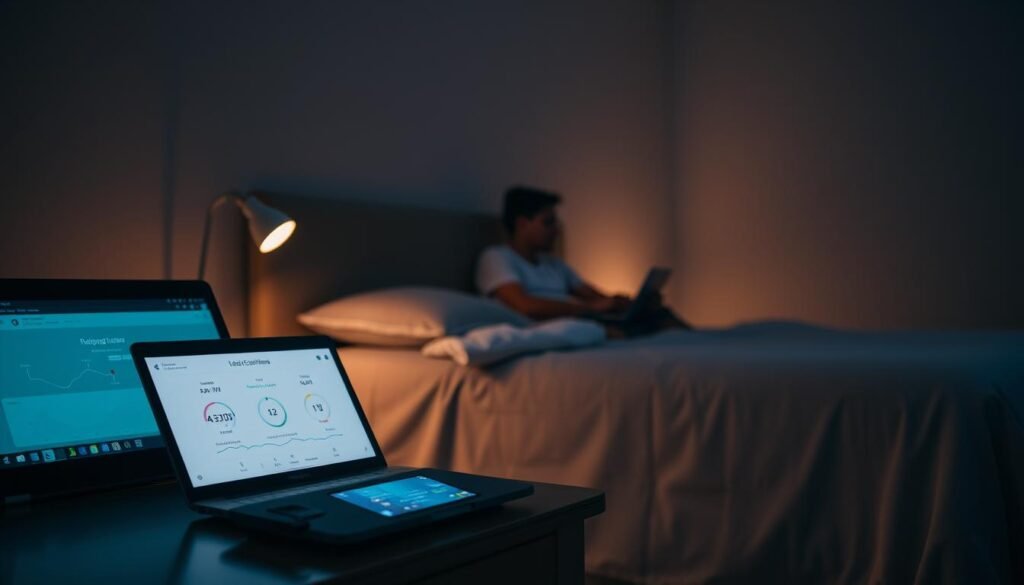
Are your late-night habits keeping you from a good night’s rest? Technology and work-related activities can disrupt your ability to unwind and fall asleep. By making small adjustments to your evening routine, you can create a more restful environment and improve your sleep quality.
Reducing Screen Time and Blue Light Exposure
Your phone, tablet, or laptop emits blue light, which can interfere with your body’s natural sleep cycle. This light suppresses melatonin, the hormone that signals it’s time to rest. To minimize its impact, turn off screens at least an hour before bed.
Replace screen time with calming activities like reading or meditating. These habits help your brain transition into a state of relaxation, making it easier to fall asleep. Here’s a quick guide to reducing blue light exposure:
| Time Before Bed | Activity |
|---|---|
| 1 hour | Turn off screens and dim lights |
| 30 minutes | Read a book or practice mindfulness |
| 10 minutes | Prepare for bed in a calm environment |
Strategies to Avoid the Snooze Button
Hitting the snooze button might feel tempting, but it can lead to fragmented sleep and grogginess. Instead, set your alarm for the time you actually need to wake up. This helps maintain a consistent sleep cycle and ensures you feel more alert in the morning.
If you struggle to get up, place your alarm across the room. This forces you to get out of bed, reducing the urge to hit snooze. Over time, this habit can help you become a more disciplined person who respects their sleep schedule.
Here are some additional tips to avoid the snooze button:
- Go to bed at the same time every night to ensure you’re well-rested.
- Create a morning routine that motivates you to start your day.
- Limit late-night activity to ensure your body is ready for rest.
By managing your technology use and work habits, you can create a more balanced evening routine. These small changes can lead to better sleep and improved energy throughout the day.
Conclusion
Improving your nightly routine doesn’t have to be overwhelming. By focusing on small, consistent changes, you can transform your rest and wake up feeling refreshed. Managing screen time and avoiding habits like hitting snooze can make a big difference in how well you sleep.
Creating a calming environment and sticking to a set schedule helps your body prepare for rest. Using an alarm clock effectively, without pressing the button repeatedly, ensures you start your day alert and energized. These adjustments, though simple, can lead to more restorative nights.
For a deeper dive into optimizing your routine, explore this structured approach. Start implementing these strategies today and experience the benefits of better rest and improved overall health.
FAQ about 10-3-2-1-0 Sleep Rule
What is the 10-3-2-1-0 sleep rule?
The 10-3-2-1-0 sleep rule is a guideline designed to improve your sleep quality by structuring your evening routine. It suggests avoiding caffeine 10 hours before bed, stopping food and alcohol 3 hours before, ending work 2 hours prior, and cutting screen time 1 hour before sleep. The “0” means no hitting the snooze button in the morning.
How does this rule benefit my health?
Following this rule can enhance your sleep quality, improve your body’s natural sleep cycle, and reduce insomnia. It also helps your brain relax, leading to better overall health and daytime energy.
What should my evening schedule look like?
Your evening schedule should include winding down activities like reading or meditation, avoiding heavy meals, and reducing blue light exposure from screens. Aim to create a calming bedtime routine to signal your body it’s time to rest.
How can I improve my sleep hygiene?
Focus on creating a comfortable sleep environment with a supportive mattress, dim lighting, and a cool room temperature. Stick to consistent pre-bed habits like brushing your teeth and practicing relaxation techniques.
When should I stop consuming caffeine and alcohol?
Avoid caffeine at least 10 hours before bedtime and stop consuming alcohol 3 hours prior. Both can disrupt your sleep cycle and reduce the quality of your rest.
How can I reduce screen time before bed?
Limit screen use at least 1 hour before bed to minimize blue light exposure. Consider using apps or settings that reduce blue light on your devices or switch to activities like reading a book.
Why should I avoid hitting the snooze button?
Hitting the snooze button can fragment your sleep and make you feel groggier. Instead, set your alarm for the time you need to wake up and get out of bed immediately to start your day refreshed.
Source Links
- Yoga Poses for Sleep | Before Bed Yoga Poses | Eve Sleep
- The 5 AM Billionaire Routine: Science-Backed Habits for Maximum Productivity
- Sleep Hygiene Handout & Example | Free PDF Download
- Sleep Hygiene: Expert Recommendations for Better Sleep Quality
- 679: Motivation Monday – Overcome Major & Minor Setbacks Easily, Fruit Makes You Fat & Does Sweating Mean Fat Loss? by Fit, Healthy & Happy Podcast
- 592: 7 Steps to Increase & Boost Your Metabolism by Fit, Healthy And Happy Podcast
- 197: 15 Tips to Consume Less Calories & Be More Full! by Fit, Healthy And Happy Podcast
- Sleep Hygiene and Best Practices – Neurology Solutions
- What Is the 10-3-2-1-0 Sleep Rule? | Call (855) 977-0400