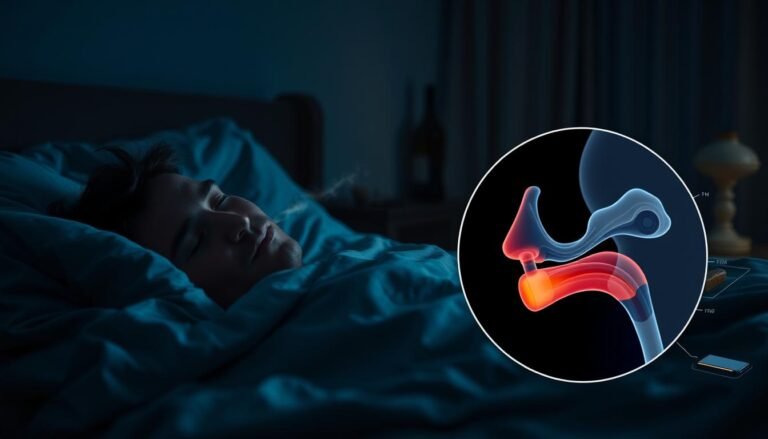
You snore when the soft tissues of your mouth, throat or nose vibrate as air passes through a narrowed airway during sleep. It is very common, about 40% of adult men and 24% of adult women snore habitually, and it is usually harmless. Losing excess weight, avoiding alcohol before bed, stopping smoking and sleeping on your side help most people. Loud snoring with gasping, pauses in breathing or daytime sleepiness can be a sign of sleep apnea and needs a doctor.
Worried your snoring might be sleep apnea? The sleep apnea risk calculator checks your night signs, daytime symptoms and risk factors in a minute.
What Causes Snoring?
Snoring is caused by your tongue, mouth, throat or the airways in your nose vibrating as you breathe (NHS). The sound usually happens as you breathe in and can come through the nose, the mouth or both (AASM Sleep Education). When you sleep, the muscles of the throat relax and the airway narrows; the narrower it is, the faster the air moves and the more the tissues vibrate.
Who Is More Likely To Snore?
Snoring is more common in men, runs in families and becomes more common with age. About 40% of adult men and 24% of adult women are habitual snorers (AASM Sleep Education). You are more likely to snore if you:
| Risk factor | Why it matters |
|---|---|
| Are overweight | Extra tissue around the neck narrows the airway |
| Drink alcohol, especially in the evening | Alcohol and other sedatives relax the throat muscles |
| Smoke | Irritates and swells the lining of the nose and throat |
| Sleep on your back | The tongue and soft palate fall back toward the throat |
| Have a blocked nose | Colds, allergies or nasal problems force mouth breathing |
The first four come straight from NHS guidance (NHS); MedlinePlus adds that snoring is especially common in older people and people who are overweight (MedlinePlus).
Is Snoring A Sign Of Sleep Apnea?
Sometimes. Snoring can be a symptom of sleep apnea, but not everyone who snores has a sleep disorder (AASM Sleep Education). The pattern around the snoring tells them apart.
| Simple snoring | Possible sleep apnea | |
|---|---|---|
| Breathing | Steady | Stops and starts; choking or gasping |
| Daytime | Feel normal | Tired or sleepy despite enough sleep |
| Morning | Sometimes a dry mouth or sore throat | Headaches, unrefreshed |
| Next step | Lifestyle changes | See a doctor for a sleep test |
Heavy snoring linked to sleep apnea matters because untreated sleep apnea is a risk factor for heart disease, stroke and diabetes. Read more in sleep apnea health risks, or see how doctors screen for it in our guide to the STOP-Bang questionnaire.
How Can I Stop Snoring?
Start with the changes that sleep medicine recommends for everyone who snores: avoid alcohol before bed, stop smoking, lose excess weight and sleep on your side (AASM Sleep Education).
- Sleep on your side. A pillow behind your back, or a pillow that keeps your head and neck level, makes side sleeping easier; the pillow height calculator helps you choose one.
- Avoid alcohol in the evening, and check with your doctor whether any medicines you take are sedating.
- Lose excess weight. Even a modest loss can reduce pressure on the airway; weight and sleep apnea are closely linked, see sleep apnea and weight gain.
- Stop smoking.
- Treat a blocked nose. Nasal strips or dilators, or decongestants and sprays for swelling, can help when the nose is the problem (NHS).
What Treatments Are There If Lifestyle Changes Do Not Work?
Treatment depends on the cause, so talk to a doctor about the best option for you (NHS). A GP will usually look inside your mouth and nose for anything that might be causing the snoring.
| Option | What it does |
|---|---|
| Nasal strips, dilators or sprays | Keep the nose open or reduce swelling |
| Mouth devices (oral appliances) | Hold the jaw or tongue forward to keep the airway open; also used for sleep apnea |
| CPAP | A machine that keeps the airway open with gentle air pressure, used for sleep apnea |
| Surgery | Sometimes used if other treatments do not help |
If your snoring turns out to be sleep apnea, it can be managed with CPAP, oral appliance therapy or surgery (AASM).
When Should You See A Doctor About Snoring?
See a GP if your snoring is affecting your life, or if you feel sleepy during the day, your breathing stops and starts while you sleep, or you make gasping or choking noises (NHS). These can be signs of sleep apnea, which can be serious if not treated. A sleep study or home sleep apnea test can diagnose it.
What Can You Do If Your Partner Snores?
A snoring partner can cost you sleep too, so it is worth tackling together rather than just moving to another room.
- Notice the pattern. You are often the only one who can tell whether the snoring stops and starts, or ends in gasps. Mention it, because these are signs of sleep apnea.
- Try the simple changes first. Side sleeping, no alcohol in the evening and treating a blocked nose help many snorers.
- Protect your own sleep meanwhile. Earplugs or a fan for steady background noise can help, and going to sleep first gives you a head start.
- Encourage a doctor visit if snoring is loud every night or comes with daytime sleepiness.
What Snoring Myths Should You Ignore?
“Snoring Is Always Harmless”
Most snoring is, but loud snoring with pauses, gasping or daytime sleepiness is not.
“Only Overweight Men Snore”
Snoring is more common in men and in people who are overweight, but many women and slim people snore too.
“A Nightcap Helps You Sleep”
Alcohol relaxes the throat muscles and can make snoring worse.
“Anti-Snoring Gadgets Fix Everything”
Devices can help some people, but they will not treat sleep apnea on their own. Check with a doctor if you have warning signs.
Not sure whether to see a doctor? Run through the sleep apnea risk calculator and take the result to your appointment.
Snoring FAQs
Why Do I Snore All Of A Sudden?
Weight gain, a cold or allergy, evening alcohol or new sedating medicine are common reasons. If it comes with gasping or sleepiness, see a doctor.
Does Sleeping On Your Side Stop Snoring?
It helps many people, because the tongue and soft palate are less likely to fall back into the airway.
Is Snoring Bad For Your Health?
Simple snoring is usually harmless, but heavy snoring can be linked to sleep apnea, which raises the risk of heart disease, stroke and diabetes.
Can Women Snore As Much As Men?
Women snore too. About 24% of adult women snore habitually, compared with about 40% of men.
Do Nasal Strips Work For Snoring?
They can help when snoring comes from the nose by holding the nostrils open. They do not treat sleep apnea.
When Is Snoring An Emergency?
Snoring itself is not an emergency, but long pauses in breathing, choking or severe sleepiness while driving need prompt medical advice.