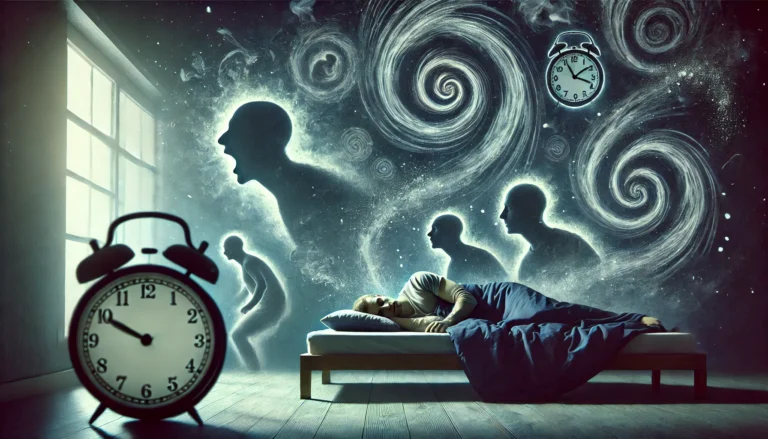
The main signs of a sleep disorder are trouble falling or staying asleep most nights, feeling very sleepy during the day despite enough time in bed, and things other people notice while you sleep. According to MedlinePlus, warning signs include:
- regularly taking more than 30 minutes to fall asleep;
- waking several times and struggling to get back to sleep, or waking too early;
- often feeling sleepy in the day, napping a lot or falling asleep at the wrong times;
- a bed partner hearing you snore loudly, snort, gasp, choke or stop breathing for short periods;
- creeping or tingling feelings in the legs or arms, eased by moving them, mostly in the evening;
- arms or legs that jerk often during sleep;
- vivid, dreamlike experiences while falling asleep or dozing;
- sudden muscle weakness triggered by strong emotions;
- briefly being unable to move or speak when you first wake up.
One sign alone does not mean you have a disorder. Some people who are tired in the day have a true sleep disorder, while others simply do not get enough sleep; most adults need about 7 to 9 hours a night (MedlinePlus).
Want to check your own symptoms? The sleep disorder symptom checker shows which disorders your symptoms point to, so you know what to raise with a doctor.
Sign, Possible Disorder And Next Step
| Sign | Possible disorder | Next step |
|---|---|---|
| Loud snoring with pauses, choking or gasping | Obstructive sleep apnea | See a doctor; home sleep apnea test or in-lab sleep study |
| Trouble falling or staying asleep 3 or more nights a week | Insomnia | Keep a sleep diary for 1 to 2 weeks, then see a doctor |
| Urge to move the legs at rest, worse in the evening | Restless legs syndrome | Doctor visit; blood tests for iron and ferritin |
| Sleep attacks in the day, weakness when laughing | Narcolepsy | Sleep specialist; sleep study plus daytime nap test (MSLT) |
| Cannot fall asleep until very late, very hard to wake | Delayed sleep-wake phase disorder | Sleep diary or actigraphy, sleep doctor |
| Shouting, punching or kicking while dreaming | REM sleep behavior disorder | Make the bedroom safe; see a sleep doctor soon |
| Unable to move for seconds or minutes when waking | Sleep paralysis | Usually no test; see a doctor if frequent or you are very sleepy by day |
Obstructive Sleep Apnea
In obstructive sleep apnea the airway becomes blocked again and again during sleep, so you may snore loudly or make choking noises and wake briefly, from a few times a night to several hundred times in severe cases (AASM Sleep Education).
Key Signs
At night: breathing that stops and starts, frequent loud snoring and gasping for air. A partner often notices these first. By day: sleepiness and tiredness, dry mouth, headache, insomnia and waking often to urinate (NHLBI). Snoring is most likely to be a sign of sleep apnea when it is followed by silent pauses and choking or gasping sounds; not everyone who snores has it (AASM).
Who Is At Risk
Excess body weight is the major risk factor. Others include a neck size of 17 inches or more in men or 16 inches or more in women, being male, high blood pressure, alcohol or sedating medicines, nasal problems such as a deviated septum and a family history (AASM). Risk also rises with age, and smoking raises it (NHLBI).
How It Is Diagnosed
A doctor can diagnose it with an in-lab overnight sleep study or a home sleep apnea test (AASM). A home test is usually for people who are very likely to have moderate to severe sleep apnea and have no other significant medical conditions, and a negative home test cannot rule sleep apnea out (AASM). The sleep apnea calculator gives a quick risk estimate to take to that appointment.
Insomnia
Key Signs
Insomnia is the most common sleep complaint (AASM). It means lying awake for a long time before falling asleep, waking often or being awake for most of the night, or waking too early and not getting back to sleep. It leaves you unrested and sleepy in the day, with trouble focusing, and it can make you feel anxious, depressed or easily annoyed (NHLBI). Insomnia is considered chronic when it happens 3 or more nights a week for 3 months or longer (NHLBI).
Who Is At Risk
The chance of insomnia rises with age, and it is more common in women than men. Shift work, frequent travel across time zones, long daytime naps, caffeine, nicotine or alcohol, screens near bedtime and stress all raise the risk (NHLBI).
How It Is Diagnosed
Keeping a sleep diary for 1 to 2 weeks before your appointment helps. A sleep study is used to look for other problems such as sleep apnea or narcolepsy, and actigraphy, a small motion sensor worn on the wrist for 3 to 14 days, measures rest and activity (NHLBI). To put a number on how severe your symptoms are, try the insomnia severity calculator.
Restless Legs Syndrome
Key Signs
Restless legs syndrome causes an uncomfortable feeling in the legs, often described as itchy, crawling or throbbing, together with an urge to move them. It gets worse when you lie down or rest and is usually worse in the evening and at night. Moving eases it (AASM). More detail is in our guide to restless leg syndrome symptoms.
Who Is At Risk
Up to 13% of adults have it, and women are nearly twice as likely as men to develop it. It often runs in families and is linked with low iron, kidney failure, pregnancy and some medicines (AASM).
How It Is Diagnosed
Diagnosis is based on your symptoms and history, often with a two-week sleep diary and blood tests for ferritin and iron. A sleep study is not usually required (AASM). Do not start iron supplements without talking to your doctor.
Narcolepsy
Key Signs
The main sign is excessive daytime sleepiness despite a full night of sleep: a short nap helps, but the sleepiness returns within an hour or two. Other signs are vivid hallucinations when falling asleep or waking, sleep paralysis, broken night sleep and, in type 1 narcolepsy, cataplexy: sudden muscle weakness triggered by strong emotions such as laughter or surprise (AASM). Read more in narcolepsy explained.
Who Is At Risk
Narcolepsy affects men and women equally. Symptoms usually begin between ages 7 and 25, and because it is often mistaken for other conditions it can take years to be diagnosed (NINDS).
How It Is Diagnosed
A sleep specialist uses two tests: an overnight sleep study (polysomnogram) and a multiple sleep latency test (MSLT), a daytime nap study that measures how quickly you fall asleep and whether you enter REM sleep. You may be asked to keep a sleep journal for one to two weeks first (NINDS).
Circadian Rhythm Disorders Such As Delayed Sleep Phase
Key Signs
In delayed sleep-wake phase disorder your body clock runs two or more hours later than normal. You cannot fall asleep until late and find it very hard to get up for work or school, but sleep is normal in length and quality when you can follow your own schedule. It can look like insomnia and causes daytime sleepiness (AASM).
Who Is At Risk
It is much more common in teens and young adults and in natural night owls, and it often runs in families. Too little morning sunlight and too much bright light in the evening can make it worse (AASM).
How It Is Diagnosed
A sleep doctor relies mainly on your history and a sleep diary, which typically shows trouble falling asleep, few awakenings and short sleep on work days with long sleep at weekends. A sleep study is not normally needed (AASM). Actigraphy, worn for a few days up to two weeks, can track sleep-wake patterns over many days (AASM).
Parasomnias: Unusual Behavior During Sleep
Parasomnias are unusual behaviors during sleep or while falling asleep or waking up, such as sleepwalking or sleep talking (MedlinePlus).
REM Sleep Behavior Disorder
In REM sleep behavior disorder (RBD) you act out vivid, often action-filled dreams: shouting, swearing, punching, kicking or leaping out of bed. Episodes tend to get worse over time and can injure you or a bed partner. RBD most often appears in men over 50, affects fewer than 1% of people and is more common with some neurologic conditions such as Parkinson disease. Diagnosis needs a sleep doctor, a full exam including a neurologic exam and usually an overnight sleep study, ideally with video (AASM).
Sleep Paralysis
Sleep paralysis means being unable to move or speak for seconds to minutes when falling asleep or waking up, while still breathing normally and fully aware; some people also have hallucinations. It is fairly common, often starts in the teen years, and is more likely with sleep loss or an irregular schedule. On its own it is not a serious medical risk and most people need no tests, but see a sleep doctor if it comes with heavy daytime sleepiness or keeps you up at night, as it can be one sign of narcolepsy (AASM).
How Sleep Disorders Are Tested
- Sleep diary. Usually kept for two weeks: bedtimes, night wakings, wake times, naps, caffeine, alcohol and medicines (AASM).
- Actigraphy. A wrist device that uses movement to estimate sleep over days, used for insomnia and circadian rhythm disorders (AASM).
- Overnight sleep study. Records brain waves, eye movements, breathing and heart activity overnight (MedlinePlus).
- Home sleep apnea test. Measures breathing and blood oxygen at home, for suspected sleep apnea only (AASM).
- Daytime nap test (MSLT). Measures how fast you fall asleep by day; used for narcolepsy (AASM).
Red Flags: See A Doctor Soon
- Drowsy driving. Falling asleep or nodding off at the wheel, or not remembering part of a drive. Sleep deficiency can harm driving as much as or more than being drunk (NHLBI). Do not drive when drowsy (MedlinePlus).
- Witnessed breathing pauses. A partner sees you stop breathing, choke or gasp in your sleep.
- Acting out dreams. Punching, kicking or jumping out of bed during dreams, especially if anyone has been hurt.
- Sudden sleep attacks. Falling asleep while eating, working or talking.
Sleep Disorder Signs FAQs
Can You Have A Sleep Disorder And Not Know It?
Yes. Breathing pauses, leg jerks and acting out dreams are usually noticed by a bed partner, not by you.
What Is The Most Common Sleep Disorder?
Insomnia is the most common sleep complaint, and obstructive sleep apnea is the most common type of sleep apnea. Many people with sleep apnea have never been diagnosed.
Is Daytime Sleepiness Always A Sleep Disorder?
No. Short sleep, shift work, medicines, depression and an underactive thyroid can all cause drowsiness.
Does Snoring Mean I Have Sleep Apnea?
Not always. Many people who snore do not have sleep apnea. Snoring with silent pauses and gasping is the stronger warning sign.
What Kind Of Doctor Diagnoses Sleep Disorders?
Start with your regular doctor, who can order tests or refer you to a sleep specialist at an accredited sleep center.
Can An Online Symptom Checker Diagnose A Sleep Disorder?
No. It can show which symptoms to raise with a doctor, but only a clinical assessment, often with a sleep study, can confirm a diagnosis.