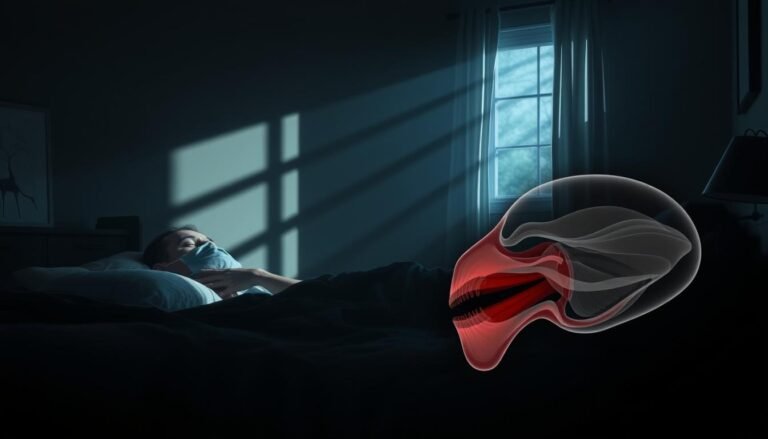
Untreated obstructive sleep apnea is a risk factor for heart disease, stroke, diabetes and many other health problems, and the daytime sleepiness it causes makes driving and work riskier. The good news is that sleep apnea is treatable, with CPAP, oral devices, lifestyle changes or surgery, and the first step is simply recognising the signs and getting a sleep test.
Could you have sleep apnea? The sleep apnea risk calculator checks your night signs, daytime symptoms and risk factors and tells you whether to ask about a sleep test.
What Is Sleep Apnea?
In obstructive sleep apnea, the airway repeatedly narrows or closes during sleep, so breathing stops and starts. The brain and body become short of oxygen and you may wake briefly, a few times a night or, in severe cases, several hundred times a night (AASM Sleep Education). Most people do not remember these awakenings, but their sleep is broken and unrefreshing. Many people with sleep apnea do not know they have it until a bed partner notices loud snoring or pauses in their breathing, which is why it often goes undiagnosed for years.
What Health Problems Are Linked To Sleep Apnea?
Heavy snoring linked to sleep apnea is a risk factor for heart disease, stroke, diabetes and many other health problems (AASM Sleep Education). The American Academy of Sleep Medicine lists these as medical problems common in people with sleep apnea (AASM):
| Area | Conditions common in people with sleep apnea |
|---|---|
| Heart and circulation | High blood pressure, coronary artery disease, heart attack, congestive heart failure, atrial fibrillation |
| Brain | Stroke |
| Metabolism | Type 2 diabetes |
| Mood | Mood disorders |
“Common in” means these conditions often occur together with sleep apnea; it does not mean sleep apnea is always the cause. Doctors look for sleep apnea in people with these conditions, and treat both.
How Does Sleep Apnea Affect You During The Day?
Broken sleep shows up in the day. People with sleep apnea often report daytime sleepiness, unrefreshing sleep, fatigue, morning headaches, difficulty concentrating, memory problems, irritability and waking at night to use the bathroom (AASM).
Sleep apnea can also affect your ability to drive well (NHLBI). If you nod off while driving or in conversation, see a doctor promptly and avoid driving when drowsy.
Is Sleep Apnea Dangerous During Surgery?
Yes, it can be. Sleep apnea can raise your risk of complications if you are having surgery (NHLBI), partly because anaesthesia and pain medicines relax the airway further. Always tell your surgical team if you have, or might have, sleep apnea, and bring your CPAP machine if you use one.
Who Is Most At Risk Of Sleep Apnea?
Excess body weight is the major risk factor, but slim people can have sleep apnea too. Other common risk factors are a large neck (17 inches or more for men, 16 inches or more for women), being male, middle age, high blood pressure, alcohol or sedating medicines, nasal problems and a family history (AASM). Weight and sleep apnea feed each other; see the link between sleep apnea and weight gain.
What Are The Warning Signs?
The main signs at night are loud snoring and pauses in breathing or choking and gasping that a bed partner notices. During the day, look for sleepiness despite enough time in bed. Not everyone who snores has sleep apnea; our guide to snoring causes and solutions explains the difference.
How Is Sleep Apnea Treated?
Treatment keeps the airway open during sleep. Your provider may recommend lifestyle changes, a positive airway pressure machine, an oral device or other treatments (NHLBI).
| Treatment | How it works |
|---|---|
| CPAP | Provides constant air pressure through the nose and/or mouth to keep the airway open |
| BPAP | Like CPAP but with different pressures for breathing in and out |
| Oral device | Worn in the mouth to prevent the airway from blocking; an option if you cannot use CPAP |
| Lifestyle changes | Regular physical activity, healthy sleep habits, a healthy weight, limiting alcohol and caffeine, and quitting smoking |
| Surgery | For some people with specific airway problems |
If you use an oral device, you may need to see your dentist after 6 months and then every year (NHLBI).
Does Treating Sleep Apnea Lower The Health Risks?
Treatment restores steady breathing and unbroken sleep, which is what relieves daytime sleepiness and the other symptoms. Because conditions such as high blood pressure and heart disease are common alongside sleep apnea, doctors manage them together with the sleep apnea rather than on their own. The key is using treatment every night; a CPAP machine only helps on the nights it is worn.
What Is It Like Living With Sleep Apnea?
Sleep apnea is usually a long-term condition, so the aim is a routine that keeps treatment working.
- Use treatment every night, including naps and travel. Tell your provider if the mask or device is uncomfortable; adjustments are often possible.
- Keep follow-up appointments. If you use an oral device, you may need to see your dentist after 6 months and then every year (NHLBI).
- Look after your heart health with regular activity, healthy eating, a healthy weight and not smoking; NHLBI points to the American Heart Association list of heart-healthy habits.
- Tell your surgical team before any operation, and bring your machine.
- Involve your partner. A bed partner is often the first to notice that snoring or breathing pauses have come back.
When Should You See A Doctor?
See a doctor if someone has seen you stop breathing in your sleep, you wake up choking or gasping, you snore loudly most nights, or you are sleepy in the day despite enough sleep, especially if you also have high blood pressure, heart disease, atrial fibrillation or type 2 diabetes. A home sleep apnea test or an in-lab sleep study can diagnose it.
Doctors often use short screening questionnaires before arranging a test; our guide explains how accurate the STOP-Bang questionnaire is.
Check your own signs now with the sleep apnea risk calculator and take the result to your appointment.
Sleep Apnea Health Risk FAQs
Can Sleep Apnea Cause High Blood Pressure?
High blood pressure is common in people with sleep apnea, and doctors check for sleep apnea in people whose blood pressure is hard to control.
Is Sleep Apnea Linked To Heart Disease?
Yes. Heart disease, heart failure, heart attack and atrial fibrillation are common in people with sleep apnea.
Can Sleep Apnea Cause Diabetes?
Type 2 diabetes is common in people with sleep apnea. Talk to your doctor about screening if you have both risk factors.
Is Sleep Apnea Dangerous For Driving?
It can be. Sleep apnea can affect your ability to drive well. Do not drive when drowsy.
Can Sleep Apnea Go Away?
For some people, weight loss or treating a nasal or jaw problem improves it a lot, but many people need ongoing treatment such as CPAP.
Can Thin People Have Sleep Apnea?
Yes. Excess weight is the main risk factor, but neck size, jaw shape, family history and age matter too.