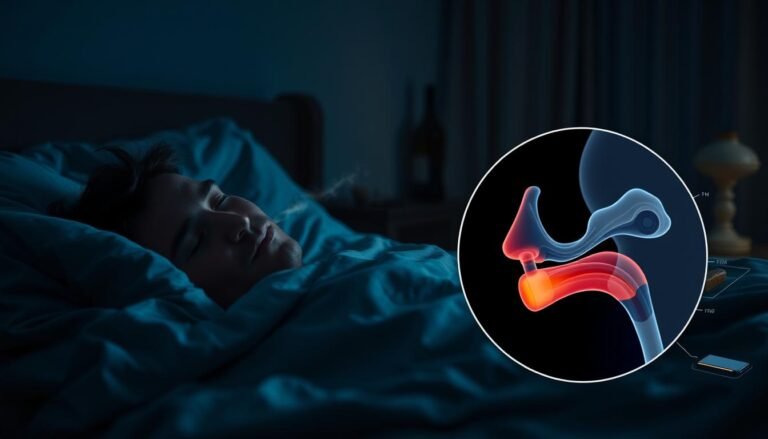
Snoring: Causes, Health Risks, and Proven Solutions
Snoring occurs when relaxed throat muscles narrow the airway during sleep, causing soft tissue vibrations. Approximately 45% of adults snore occasionally and 25% snore regularly, according to the American Academy of Sleep Medicine. Key causes include nasal congestion, excess weight, alcohol, sleep position, and undiagnosed sleep apnea. Most cases respond to lifestyle changes — severe cases require medical treatment.
- Snoring affects nearly 45% of adults at some point in their lives
- Airflow blockage — not just noise — is the core mechanical cause
- Obesity increases snoring severity by up to 50%
- About 80% of moderate-to-severe sleep apnea cases go undiagnosed
- CPAP therapy reduces sleep apnea symptoms in 80–90% of users
- Identifying your specific cause determines which solution works
What Causes Snoring?
Snoring is more than a noise that keeps your partner awake. It is a physical sign that airflow through the nose or throat is restricted during sleep. About 67% of adults in the United States snore — 45% occasionally and 25% on most nights.
When you sleep, your throat muscles relax. This narrows the airway. As air moves through the narrowed passage, soft tissues vibrate — and that vibration produces the snoring sound. The narrower the passage, the louder and more frequent the snoring.
When Snoring Becomes a Health Concern
Not all snoring signals a health problem. However, snoring and sleep apnea health risks are closely linked. Sleep apnea — a condition where breathing repeatedly stops and starts during sleep — affects approximately 22 million Americans. About 80% of moderate-to-severe sleep apnea cases go undiagnosed.
Loud chronic snoring combined with gasping, choking, or pauses in breathing during sleep are the primary warning signs of obstructive sleep apnea. Excessive daytime sleepiness, morning headaches, and difficulty concentrating are secondary signals that warrant a formal sleep study.
| Sleep Statistic | Figure | Source |
|---|---|---|
| Adults who snore occasionally | 45% | AASM, 2026 |
| Adults who snore regularly | 25% | AASM, 2026 |
| Americans with sleep apnea | ~22 million | Sleep Foundation |
| Sleep apnea cases undiagnosed | ~80% of moderate-severe | American Sleep Apnea Association |
| Adults with any sleep disorder | 70 million (US) | CDC |
Understanding which specific factor causes your snoring determines which solution will work. The sections below break down each cause — and match it with the right intervention. For a broader look at sleep disorder signals, read our guide on signs you have a sleep disorder.
The Science Behind Snoring
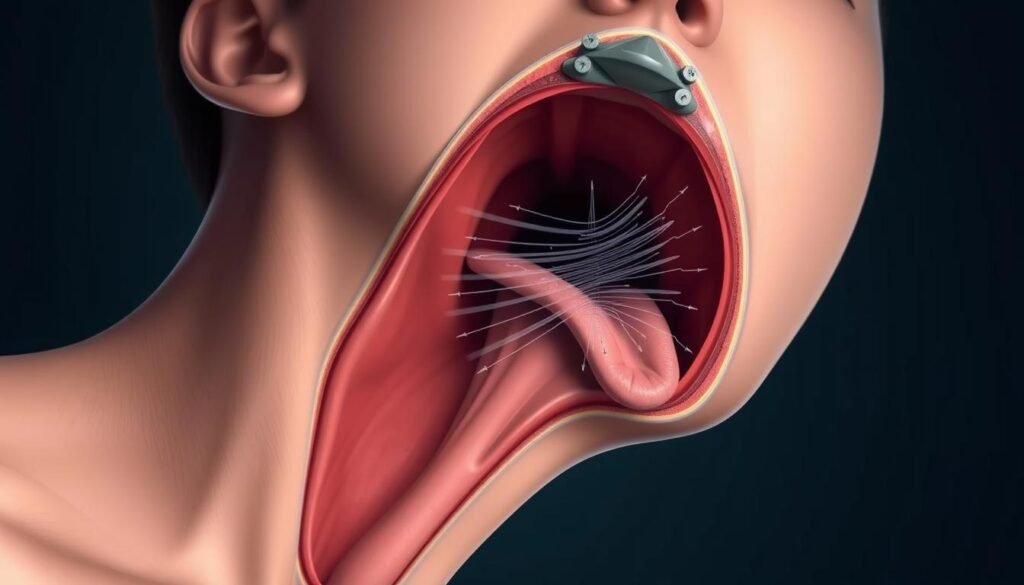
Snoring occurs when narrowed airway passages cause soft tissue vibrations — loudest when airflow is most restricted.
Snoring happens when air cannot move freely through the nose and throat during sleep. The soft tissues in the throat — including the uvula, soft palate, and tongue base — vibrate as air forces through the narrowed channel. This vibration is the sound you hear as snoring.
How Airflow Blockage Leads to Snoring
Several anatomical and physiological factors create airflow blockage. Each one reduces the diameter of the upper airway — forcing air through a smaller space at higher velocity, which increases tissue vibration intensity.
Factors that block airflow include:
- Throat anatomy — a naturally narrow airway or enlarged tonsils
- Nasal congestion — swollen membranes from allergies, infection, or a deviated septum
- Excessive throat tissue — more common in people who carry excess weight
- Tongue positioning — the tongue falls backward during sleep and partially blocks the airway
Sleep Positions That Reduce Snoring
Your sleep position directly affects how much you snore. Back sleeping is the highest-risk position — gravity pulls the tongue and throat tissues directly into the airway. Side sleeping keeps the airway more open and aligned, reducing vibration frequency and intensity.
| Sleep Position | Snoring Risk | Mechanism |
|---|---|---|
| Back sleeping (supine) | Highest | Gravity collapses throat tissues into airway |
| Side sleeping (lateral) | Lowest | Airway stays open; tongue falls sideways |
| Stomach sleeping (prone) | Moderate | Neck angle may compress airway |
| Elevated head position | Reduced vs. flat back | Gravity effect partially offset by incline |
Clinicians recommend starting with a positional change to side sleeping as the first and lowest-cost intervention for new snorers. A body pillow placed behind the back helps maintain the side position throughout the night.
Common Causes of Snoring
Nasal congestion from allergies, infections, or a deviated septum forces mouth breathing — a direct snoring trigger.
Snoring affects approximately 90 million adults in the United States. Identifying the specific cause is the first step toward an effective solution. The causes below are listed in order of clinical frequency.
Nasal Congestion and Allergies
Nasal congestion and snoring are directly connected. When the nasal passages are blocked, the body switches to mouth breathing during sleep. Mouth breathing draws air directly through the throat — where soft tissue vibration is most likely to occur.
Nasal causes of snoring include:
- Allergies — cause swelling and inflammation of nasal membranes
- Sinus infections — create additional fluid and obstruction in nasal passages
- Deviated septum — a structural misalignment that permanently restricts one nasal passage
- Nasal polyps — benign tissue growths that narrow the nasal airway
Treating the nasal cause — with antihistamines, decongestants, or nasal corticosteroid sprays — often resolves congestion-driven snoring without further intervention. Our article on sleep hygiene fundamentals includes environment steps that reduce allergen exposure in the bedroom.
Obesity and Lifestyle Factors
Excess weight — particularly fat deposits around the neck and throat — compresses the upper airway from outside. This external compression reduces airway diameter in the same way as internal tissue swelling. The effect worsens during sleep when muscle tone is further reduced.
| Lifestyle Factor | Impact on Snoring | Clinical Note |
|---|---|---|
| Weight gain | Up to 50% increase in severity | Neck fat compresses airway from outside |
| Alcohol consumption | 30% increase in frequency | Relaxes throat muscles beyond normal sleep tone |
| Smoking | Increases airway inflammation | Irritates and swells upper airway membranes |
| Sleep deprivation | Deepens muscle relaxation | Overtired muscles lose more tone; airway collapses more easily |
| Sedative medications | Significant relaxation effect | Benzodiazepines and sleep aids increase airway collapse risk |
Losing just 5–10% of body weight reduces snoring intensity measurably in overweight individuals, according to research published in Sleep Medicine Reviews. Read more about the relationship between body weight and breathing disruption in our article on the hidden link between sleep apnea and weight gain.
Alcohol and Sedatives
Alcohol relaxes the muscles of the throat beyond their normal sleep tone. This extra relaxation causes more complete airway collapse — turning a mild snorer into a loud one, or turning a non-snorer into a new snorer. Avoiding alcohol within 3–4 hours of bedtime is a standard clinical recommendation for people with snoring complaints.
Anatomical Factors
Some people snore due to anatomy — not lifestyle. These structural features narrow the airway at rest and worsen further during sleep:
- Enlarged tonsils or adenoids — most common in children; can also affect adults
- Low, thick soft palate — narrows the airway passage above the throat
- Elongated uvula — the hanging tissue at the back of the mouth creates extra vibration
- Retrognathia — a recessed lower jaw positions the tongue further back in the throat
Anatomical causes typically require medical or surgical intervention. Lifestyle changes alone do not resolve structurally driven snoring.
Solutions to Reduce Snoring
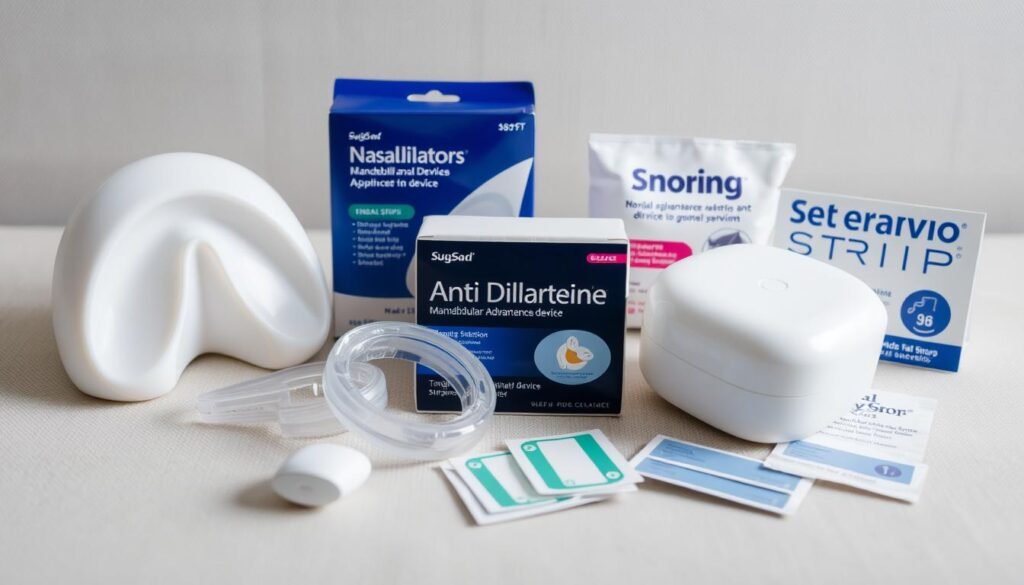
Anti-snoring solutions range from simple positional changes to clinically fitted oral appliances — the right choice depends on your specific cause.
The right solution matches the specific cause. A person who snores because of nasal congestion needs a different approach than someone who snores because of excess throat tissue. The options below are organized from lowest to highest intervention level.
Lifestyle Changes That Reduce Snoring
Start with lifestyle changes before trying devices or medical treatment. These steps address the most common snoring triggers directly:
- Sleep on your side — use a body pillow or positional device to stay off your back all night
- Lose 5–10% of body weight — reduces neck fat compression and airway narrowing
- Avoid alcohol 3–4 hours before bed — prevents excess throat muscle relaxation
- Stop smoking — reduces airway inflammation within weeks of quitting
- Elevate the head of your bed by 10–15 cm (4–6 inches) — reduces gravity's effect on throat tissues
- Treat nasal congestion — use nasal saline rinses, antihistamines, or a humidifier
- Maintain a consistent sleep schedule — prevents the deeper muscle relaxation that comes with sleep deprivation
Anti-Snoring Devices
Several clinically tested devices reduce or eliminate snoring by mechanically maintaining airway openness during sleep:
- Nasal strips — adhesive strips that physically widen nasal passages; effective for congestion-driven snoring
- Nasal dilators — small inserts that keep nasal passages open from inside
- Mandibular Advancement Devices (MADs) — oral appliances that push the lower jaw forward, pulling the tongue away from the airway; research shows MADs reduce snoring in 70% of users
- Tongue Stabilizing Devices (TSDs) — hold the tongue forward without jaw repositioning; useful for people who cannot tolerate MADs
- Anti-snoring pillows — specially shaped pillows that maintain the neck in a position that keeps the airway aligned
Clinical Note: Mandibular Advancement Devices are the most evidence-supported non-CPAP option for snoring reduction. A 2023 review in the Journal of Clinical Sleep Medicine confirmed that custom-fitted MADs — made by a dentist — outperform over-the-counter versions in both comfort and effectiveness.
Natural Remedies That Support Snoring Reduction
- Use a bedroom humidifier — dry air irritates and inflames airway membranes
- Practice throat and tongue exercises (myofunctional therapy) — strengthens upper airway muscles; studies show a 36% reduction in snoring intensity
- Stay well hydrated — dehydration thickens mucus secretions and worsens congestion
- Use nasal saline rinses before bed — clears allergens and debris from nasal passages
- Reduce bedroom allergens — wash bedding weekly, use allergen-proof covers, keep pets out of the bedroom
When to Seek Medical Help

Chronic snoring combined with gasping or daytime fatigue signals the need for a formal sleep study and medical evaluation.
Snoring that responds to lifestyle changes does not require a doctor visit. Snoring that persists despite lifestyle changes — or that includes specific warning signs — requires medical evaluation.
Is Your Snoring a Sign of Sleep Apnea?
Sleep apnea is a dangerous condition where breathing stops repeatedly during sleep. Each apnea event — a pause in breathing lasting 10 seconds or more — forces the brain to briefly wake the body to restart breathing. These micro-awakenings fragment sleep architecture and prevent restorative slow-wave sleep.
Warning signs that distinguish sleep apnea from simple snoring:
- Loud snoring that others can hear from outside a closed room
- Observed pauses in breathing during sleep (reported by a partner)
- Gasping or choking sounds during the night
- Waking up with a dry mouth or sore throat
- Morning headaches on most days
- Excessive daytime sleepiness despite a full night in bed
- Difficulty concentrating, poor memory, or mood changes
- High blood pressure that is difficult to control
If you recognize three or more of these signs, a formal sleep study is warranted. Read our full breakdown of sleep apnea health risks to understand what is at stake without treatment.
Treatment Options for Severe Snoring and Sleep Apnea
| Treatment Option | Effectiveness | Best For |
|---|---|---|
| CPAP Machine | 80–90% reduction in apnea events | Moderate to severe sleep apnea |
| Mandibular Advancement Device | 50–70% reduction in snoring | Mild-moderate sleep apnea; primary snoring |
| Weight loss | Up to 60% reduction in severity | Overweight individuals with snoring or mild OSA |
| Positional therapy | Significant for positional snorers | Back-only snorers; positional OSA |
| Surgical intervention | 80% improvement for anatomical causes | Enlarged tonsils, deviated septum, soft palate issues |
| Myofunctional therapy | 36% reduction in snoring intensity | Adjunct therapy; mild snoring with muscle weakness |
CPAP Therapy: CPAP — Continuous Positive Airway Pressure — delivers a steady stream of pressurized air through a mask worn during sleep. This air pressure acts as a pneumatic splint, keeping the airway open throughout the night. CPAP is the gold-standard treatment for obstructive sleep apnea, with an 80–90% reduction in apnea events when used consistently.
A sleep specialist — either a pulmonologist, an otolaryngologist (ENT doctor), or a neurologist with sleep medicine training — can order a polysomnography (overnight sleep study) to confirm the diagnosis and identify the right treatment. For related symptoms that frequently accompany snoring, our article on restless leg syndrome symptoms covers another common comorbid sleep complaint.
Snoring Myths Debunked
Several common beliefs about snoring are factually incorrect. These myths lead people to either ignore a serious problem or attempt ineffective solutions. Here are the most prevalent myths and what the evidence actually shows.
Myth: Snoring Is Harmless If You Feel Fine
"If I feel okay during the day, my snoring cannot be causing any health problems."
Chronic snoring — even without diagnosed sleep apnea — is associated with cardiovascular risk. Research published in Arteriosclerosis, Thrombosis, and Vascular Biology found that habitual snorers show accelerated carotid artery thickening, a marker of cardiovascular disease. Feeling fine during the day does not rule out nighttime oxygen desaturation or cumulative sleep architecture disruption.
Myth: Only Overweight People Snore
"Only people who are overweight or obese snore."
Weight is one cause — not the only cause. Thin people snore due to anatomical factors (narrow airway, retrognathia, enlarged tonsils), nasal congestion, alcohol use, and sedative medications. Children snore primarily due to enlarged tonsils and adenoids. Body weight is a modifiable risk factor, not a prerequisite for snoring.
Myth: Snoring Only Affects the Person Who Snores
"Snoring is only a problem for the snorer — not their partner."
Bed partners of habitual snorers lose an average of one hour of sleep per night, according to data from the British Snoring and Sleep Apnoea Association. This cumulative sleep loss carries the same health consequences as the snorer's own sleep disruption — including increased cardiovascular risk, mood disorders, and impaired cognitive function. Snoring is a shared health issue in any shared bedroom.
Frequently Asked Questions About Snoring
Back sleeping allows gravity to pull the tongue, soft palate, and uvula directly backward into the throat. This collapses the airway from inside. The resulting narrowing increases airflow velocity and tissue vibration — producing louder and more frequent snoring. Switching to side sleeping eliminates this gravitational effect. A body pillow placed behind your back prevents rolling onto your back during the night.
Yes — if excess weight is contributing to your snoring. Fat deposits around the neck compress the upper airway from outside. Losing 5–10% of body weight measurably reduces this compression and lowers snoring intensity. Weight loss is not a guaranteed cure if your snoring has an anatomical or nasal cause — but it is the right first step for anyone who is overweight and snoring.
Several natural approaches have clinical support. Myofunctional throat exercises reduce snoring intensity by 36% in clinical studies. Nasal saline rinses clear congestion-driven airway restriction. Humidifiers reduce airway membrane irritation from dry air. Avoiding alcohol within 3–4 hours of sleep prevents excess muscle relaxation. These work best for mild congestion-driven or position-driven snoring — not for anatomical or apnea-related causes.
See a doctor if your snoring is loud enough to be heard through a closed door, if a partner reports you gasping or stopping breathing at night, or if you feel excessively tired despite a full night in bed. Morning headaches, difficulty concentrating, and high blood pressure that is hard to control are additional warning signs. These indicate possible obstructive sleep apnea — a condition that requires formal diagnosis and treatment, not just lifestyle changes.
Allergies cause the nasal membranes to swell and produce excess mucus. This narrows or blocks the nasal passages entirely. The body switches to mouth breathing — which draws air directly through the throat where soft tissue vibration (snoring) occurs. Treating the underlying allergy with antihistamines, nasal corticosteroid sprays, or allergen avoidance directly reduces congestion-driven snoring. Air purifiers and allergen-proof bedding also reduce overnight allergen exposure.
Alcohol is a muscle relaxant. It reduces the resting tone of the throat muscles further beyond their normal sleep-related relaxation. This extra relaxation causes more complete airway collapse — turning mild snorers into loud ones and increasing snoring frequency by approximately 30%. Avoid alcohol within 3–4 hours of bedtime. Even moderate consumption (one to two drinks) within this window measurably worsens snoring in people with existing snoring patterns.
Yes. Nasal strips, nasal dilators, and over-the-counter mandibular advancement devices are available without a prescription. Research shows that MADs reduce snoring in 70% of users. However, over-the-counter MADs are less effective than custom-fitted versions made by a dentist. If over-the-counter devices do not resolve snoring within 2–4 weeks, a doctor visit is recommended to rule out an underlying condition like sleep apnea.
Yes — for position-dependent snorers. Research identifies a subgroup of snorers (called "positional snorers") whose snoring occurs exclusively or primarily when sleeping on their back. For this group, switching to side sleeping eliminates or dramatically reduces snoring. A body pillow, wedge pillow, or positional alarm device can maintain side sleeping throughout the night. Positional therapy is the lowest-cost and lowest-risk intervention available.
📋 Summary: Snoring Causes and Solutions
Snoring occurs when relaxed throat muscles narrow the airway during sleep, causing soft tissue vibration. The primary causes are nasal congestion, excess weight, alcohol consumption, anatomical airway narrowing, back sleeping, and undiagnosed sleep apnea.
Approximately 45% of adults snore occasionally and 25% snore regularly. Lifestyle changes — side sleeping, weight loss, and alcohol avoidance — resolve most mild-to-moderate snoring. Anti-snoring devices such as mandibular advancement devices reduce snoring in 70% of users.
Snoring accompanied by gasping, observed breathing pauses, or excessive daytime sleepiness requires a formal sleep study. CPAP therapy reduces sleep apnea events by 80–90% in consistent users. Anatomical causes may require surgical correction. Identifying the specific cause determines the right solution.
📚 Further Reading
- Mayo Clinic: Snoring — Symptoms and Causes — Authoritative clinical overview with diagnostic guidance.
- Mayo Clinic: Snoring — Diagnosis and Treatment — Full treatment pathway including CPAP, oral appliances, and surgery.
- Sleep Apnea Health Risks — What happens to your body when snoring signals untreated OSA.
- Signs You Have a Sleep Disorder — How to identify whether your sleep symptoms require medical evaluation.
- Waking Up Tired After 8 Hours — Why you may still feel exhausted despite a full night in bed — a common sleep apnea symptom.
- Sleep Cycle Science — How NREM and REM stages work and why sleep architecture disruption from snoring matters.
- Restless Leg Syndrome Symptoms — A comorbid sleep disorder frequently seen alongside snoring and sleep apnea.