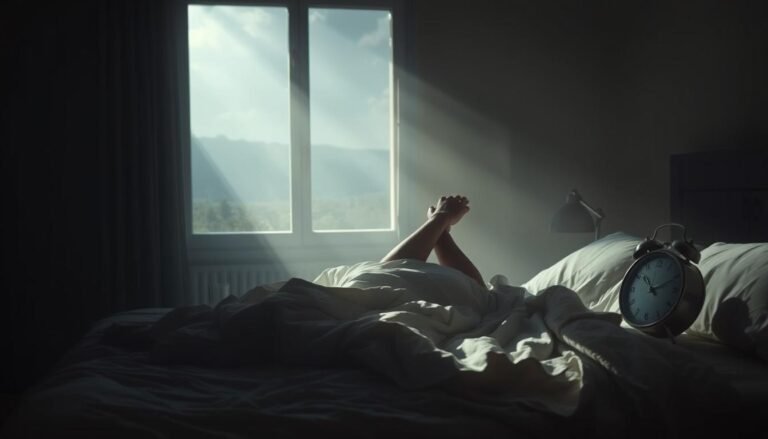
Quick Answer: Sleepwalking happens when you partly wake from deep sleep, so the body moves while the brain stays mostly asleep. About 7 percent of people do it at least once. Episodes are usually brief and the cause is often too little sleep, family history, alcohol or certain medicines. Focus on safety and steady sleep.
See how much sleep you may be missing with our sleep debt calculator.
What Is Sleepwalking?
Sleepwalking, also called somnambulism, is when you get up and move around while asleep. The NHS says a person may appear to wake up, sit up or get out of bed, usually with the eyes open and a blank face. They cannot respond normally to what is around them (NHS).
Many episodes are routine, such as getting dressed or walking around the house. Less often, people do more complex things, such as eating or leaving the house. MedlinePlus adds that most episodes last less than 10 minutes, though some run 30 minutes or longer.
Why Does Sleepwalking Happen?
The NHS explains that you partly wake from deep sleep in a way that lets you move while your brain is not fully awake. It says experts do not know exactly why this happens. MedlinePlus says it most often occurs during deep non-REM sleep, called N3, early in the night, which fits the timing. You can see where that stage fits in our guide to the stages of sleep.
Because deep sleep shrinks as we age, MedlinePlus says sleepwalking is much more common in children and young adults than in older adults.
How Common Is Sleepwalking?
More common than most people think. A 2016 meta-analysis of 51 studies estimated that 6.9 percent of people sleepwalk at some point in life. In the past 12 months, 5.0 percent of children and 1.5 percent of adults did (Stallman and Kohler). Cleveland Clinic gives a similar picture, with most people growing out of it by adulthood.
| Measure | Estimate | Source |
|---|---|---|
| Ever sleepwalked (lifetime) | 6.9 percent | Meta-analysis |
| Children, past year | 5.0 percent | Meta-analysis |
| Adults, past year | 1.5 percent | Meta-analysis |
The authors warn that none of the ways studies measured sleepwalking had been validated, so treat these numbers as rough. Most studies relied on what people or parents reported.
What Triggers Sleepwalking?
Several things can make an episode more likely. The NHS lists these:
- Not getting enough sleep.
- Other conditions that affect sleep, such as sleep apnea or restless legs syndrome.
- Being unwell with a high temperature.
- Taking certain medicines, such as sleeping pills.
- Stress.
- Drinking alcohol.
MedlinePlus agrees that fatigue, lack of sleep and anxiety are linked to sleepwalking. In adults it also names sedatives, some sleeping pills and seizures. Cleveland Clinic adds a full bladder or noises that wake you as possible triggers in people already prone to it.
Does Sleepwalking Run In Families?
Yes. Both the NHS and MedlinePlus say it tends to run in families. Cleveland Clinic gives numbers: if one parent has a history of sleepwalking, their child has a 47 percent chance of doing it too, and 62 percent if both parents have a history. These are family-risk figures from that clinical source, not a guarantee for any one child.
Which Medicines Can Be Involved?
Some can. Cleveland Clinic says several types of medicine might trigger episodes and names zolpidem, quetiapine and metoprolol as among the most likely. MedlinePlus notes that short-acting tranquilizers can reduce episodes in some cases, yet some of these medicines can also cause sleepwalking.
The NHS is clear on one point: do not stop a medicine without talking to a doctor. If you think a prescription is playing a part, ask your prescriber to review it.
Can Alcohol, Stress Or Poor Sleep Make It Worse?
They can. The NHS advises not drinking caffeine or alcohol in the evening if you sleepwalk. MedlinePlus advises avoiding sleep deprivation, preventing insomnia and reducing stress, anxiety and conflict, all of which can worsen the condition. Learn how alcohol changes your night in alcohol and sleep.
A steady routine helps. The NHS suggests relaxing before bed, avoiding daytime naps and going to bed and getting up at the same times each day. Our sleep hygiene 101 guide covers the basics.
Is It Dangerous To Wake A Sleepwalker?
No. MedlinePlus states that it is not dangerous to awaken a sleepwalker, though the person is often confused or disoriented for a short time. It also calls out the opposite myth, that a sleepwalker cannot be hurt. Sleepwalkers are commonly injured when they trip and lose their balance.
The NHS suggests first trying to gently guide the person back to bed. If you need to wake them, do it gently, because someone woken suddenly will be confused and may be scared, angry or upset. Cleveland Clinic gives the same advice.
How Can You Make Your Home Safer?
Safety matters most, since the main risk is injury rather than the sleepwalking itself. A hospital review from Switzerland found 11 sleepwalking-related trauma cases among about 620,000 emergency admissions over 15 years. Falls were the leading cause, and four patients needed hospital admission for orthopedic injuries (Sauter and colleagues). One hospital cannot tell us how often injuries happen everywhere, but it shows what to guard against.
The NHS recommends:
- Keep doors and windows closed, and use stair gates for children.
- Keep floors clear and remove anything someone could trip on.
- Lock away sharp objects, such as knives and tools.
- Fit door alarms if there is a risk of leaving the house.
- Do not let a child who sleepwalks sleep in the top of a bunk bed.
MedlinePlus also suggests moving electrical cords and furniture that could cause a fall.
Can A Sleep Diary Help?
The NHS suggests keeping a sleep diary. Record whether you sleepwalked, what time you went to bed, how well you slept, whether you had caffeine or alcohol, and whether you felt tired or stressed. Cleveland Clinic also notes that phone or security-camera videos can help a provider, because sleepwalking does not happen every night and can be hard to capture in a sleep study.
What Is The Link With Sleep Apnea And Restless Legs?
Other sleep disorders can make sleepwalking more likely. The NHS names sleep apnea and restless legs syndrome, and Cleveland Clinic says apnea may increase the odds, perhaps through how it disrupts the sleep cycle. If you also snore loudly, gasp or feel very tired by day, read obstructive sleep apnea symptoms.
An urge to move the legs in the evening is another clue. See restless leg syndrome symptoms for the signs.
How Is Sleepwalking Treated?
Often it is not. The NHS says sleepwalking does not usually need treatment and most children grow out of it by their teens. MedlinePlus agrees that most people need no specific treatment. If it is linked to another condition or a medicine, treating the condition or changing the medicine should help.
When episodes are frequent or risky, a doctor may refer you to a sleep clinic. The NHS says treatment there may include psychological therapies such as cognitive behavioral therapy or hypnotherapy, and medicines such as clonazepam or antidepressants if other things have not worked. MedlinePlus says hypnosis and timed awakenings may help some people.
What If An Older Adult Starts Sleepwalking?
New sleepwalking late in life deserves a check. MedlinePlus says that in older adults it may be a symptom of a medical problem that causes decreased mental function. If it happens often, a provider may do an exam or tests to rule out other disorders, such as seizures.
When To See A Doctor
Talk to a doctor if sleepwalking is frequent or persistent, it disrupts your sleep, you worry about injuries, you feel very tired during the day, your breathing seems to stop and start in sleep, or you do dangerous things such as driving while asleep.
If someone is hurt or has left the house, get help right away. In the US, call 911 for an emergency.
FAQs About Sleepwalking
What Causes Sleepwalking?
It happens when you partly wake from deep sleep. Triggers include lack of sleep, stress, alcohol, fever, certain medicines and other sleep disorders.
Is It Bad To Wake Up A Sleepwalker?
No. MedlinePlus says it is not dangerous. Do it gently, because the person may be confused or upset.
Do Adults Sleepwalk?
Yes, but less often. A meta-analysis estimated 1.5 percent of adults sleepwalked in the past year, versus 5.0 percent of children.
Is Sleepwalking Genetic?
It runs in families. Cleveland Clinic says a child has a 47 percent chance if one parent has a history and 62 percent if both do.
Can Medicines Cause Sleepwalking?
Some can. Cleveland Clinic names zolpidem, quetiapine and metoprolol. Ask your prescriber before stopping any medicine.
Do Children Outgrow Sleepwalking?
Most do. The NHS says most children grow out of it by their teens, usually without treatment.
Does Sleepwalking Need Treatment?
Usually not. Safety steps and good sleep habits are the main tools. See a doctor if it is frequent or risky.