Baby Sleep Calculator
Get a personalized sleep schedule for your baby or toddler (0 to 36 months)
Last updated: July 7, 2026
Total Sleep Needs
Age-based 24-hour recommendations
Nap Schedule
Custom nap times and lengths
Wake Windows
Ideal time between sleep periods
Enter Your Baby's Information
0-3 months
4-11 months
12-36 months
Your Baby's Results
Sleep Summary
Wake Window
Nap Breakdown
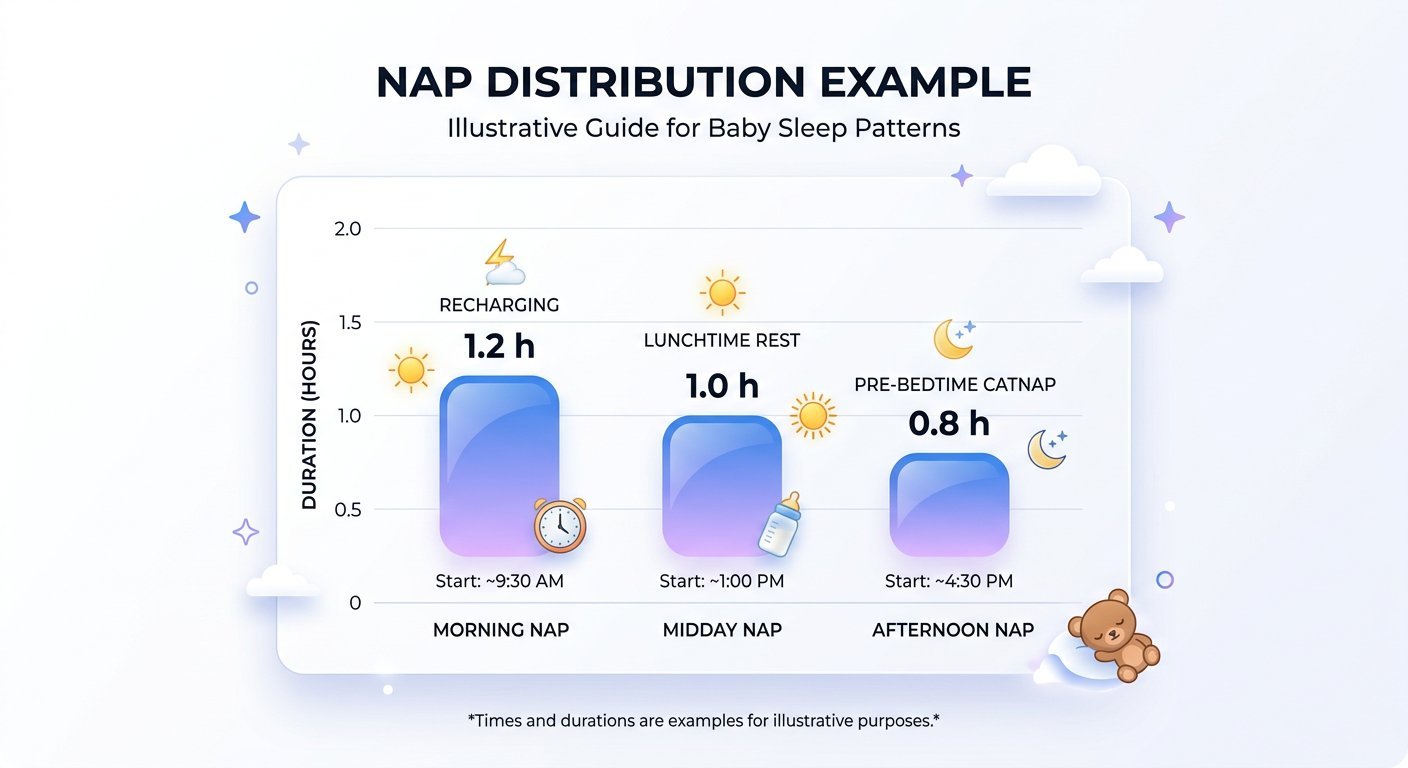
Today's Recommended Schedule
Real Examples of How Parents Use This Tool
Emma, 5 months old
Emma wakes at 7:00 AM. Her parents used the calculator and learned her wake window is 1.5 to 2 hours. The tool suggested her first nap around 8:30 AM. After four days, Emma started sleeping longer at night.
Liam, 9 months old (premature)
Liam was born 6 weeks early. His parents used corrected age (7.5 months). The calculator showed he still needed three naps. This helped them avoid pushing him too hard during the day.
Sophia, 15 months old
Sophia fought her second nap. The calculator showed she was ready to drop to one nap. Her parents moved her nap to 12:30 PM and bedtime to 7:00 PM. Her mood improved within a week.
Complete Guide to Baby Sleep
How the Calculator Works
The tool uses your baby's age to determine how much sleep they need. It also calculates the best times for naps based on wake windows.
You enter your baby's age and current wake time. The calculator then builds a full day schedule that matches their developmental stage.
What Are Wake Windows?
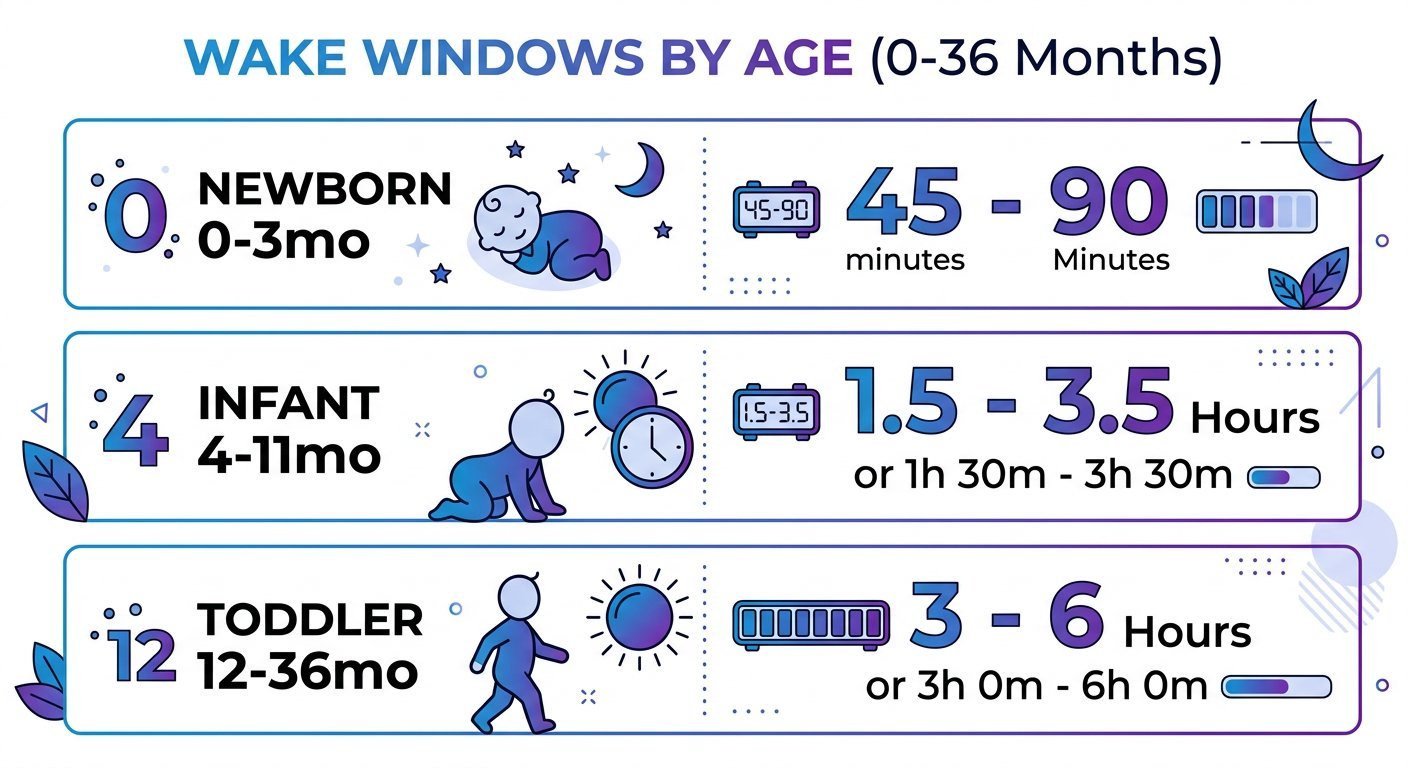
Wake windows are the periods your baby stays awake between naps. They grow longer as your baby gets older.
Newborns can usually stay awake for 30 to 60 minutes. By 6 months, most babies can handle 2 to 2.5 hours. Toddlers can stay awake 4 to 6 hours before bedtime.
Understanding Sleep Needs by Age
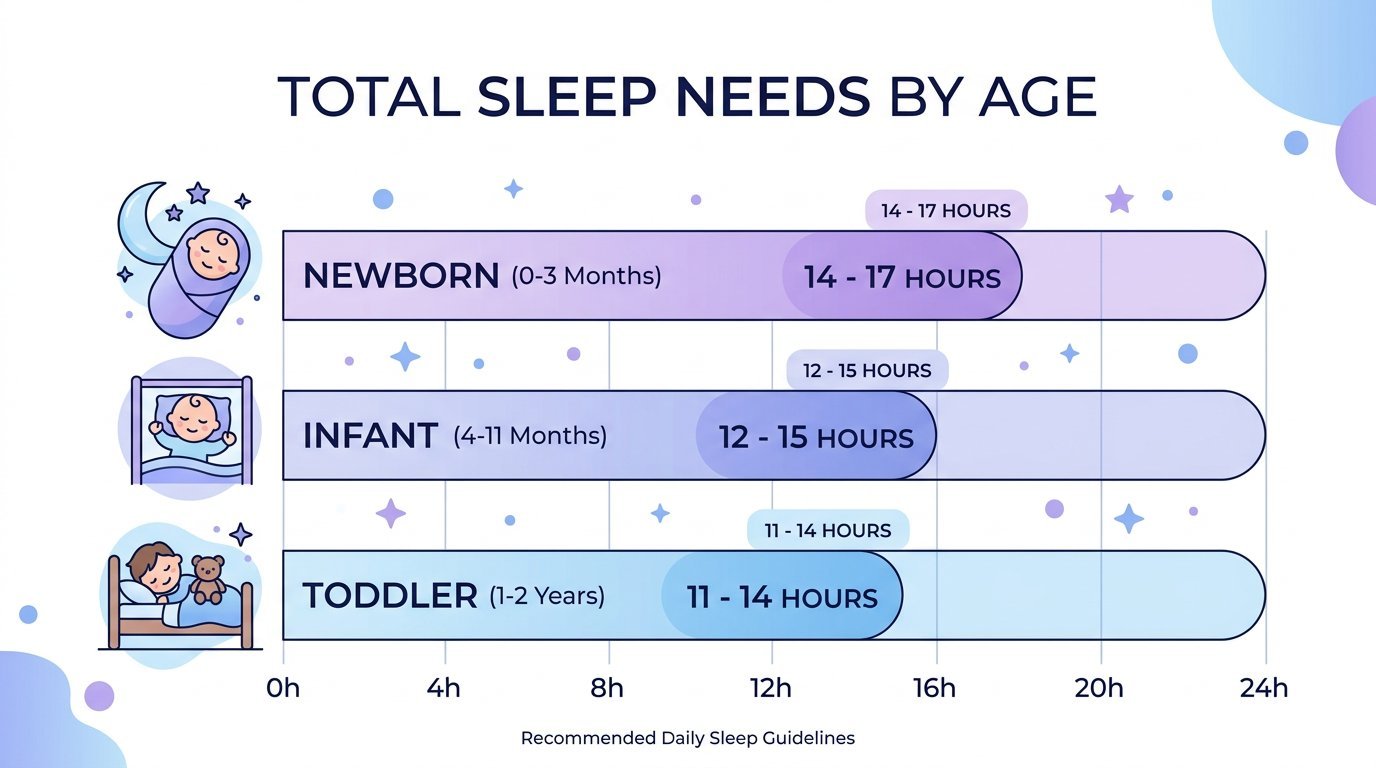
Newborns sleep the most. They need 14 to 17 hours of sleep in a full day. This sleep is spread across many short periods.
Infants (4 to 11 months) need 12 to 15 hours. They usually take 3 to 4 naps during the day.
Toddlers (1 to 3 years) need 11 to 14 hours. Most move to one nap around 12 to 18 months.
Sleep Regressions Explained
Sleep regressions happen when your baby suddenly has more trouble sleeping. They are linked to big developmental changes.
The 4-month regression is the most common. Your baby's sleep cycles change permanently at this age. Many parents notice more night wakings.
The 8 to 10 month regression often comes with crawling and separation anxiety. The 18-month regression is tied to language growth and independence.
Using Corrected Age for Premature Babies
Premature babies may need sleep schedules based on their corrected age. This is their actual age minus the weeks they were born early.
For example, a 6-month-old baby born 8 weeks early has a corrected age of 4 months. Use the 4-month recommendations until they catch up.
Creating a Good Bedtime Routine
A consistent bedtime routine helps your baby know it is time to sleep. Start the routine at the same time each night.
Good routines often include a bath, reading a book, and singing a lullaby. Keep the room dark and cool.
Common Sleep Mistakes Parents Make
Many parents wait too long between naps. This leads to an overtired baby who has trouble settling.
Another common mistake is changing the schedule too often. Babies need consistency to develop healthy sleep patterns.
When to Talk to Your Pediatrician
Contact your doctor if your baby seems extremely tired during the day or wakes constantly at night. Very short naps or long periods of crying before sleep can also be signs of a problem.
How to Help Your Baby Sleep Better
Make sure your baby gets plenty of natural light during the day. This helps set their internal clock.
Keep the bedroom quiet and dark at night. White noise can help block household sounds.
Frequently Asked Questions
Newborns need 14 to 17 hours, infants need 12 to 15 hours, and toddlers need 11 to 14 hours of sleep each day.
Wake windows show how long your baby can comfortably stay awake between naps. They increase with age.
Most babies transition to one nap between 12 and 18 months of age.
Subtract the number of weeks your baby was born early from their actual age to get the corrected age.
Overtired babies often rub their eyes, yawn, become fussy, or have trouble settling. They may also wake more frequently at night.
Stick to a consistent schedule and shorten wake windows slightly. The regression is permanent, so adjust expectations and focus on safe sleep habits.
Yes, white noise is safe when kept at or below 50 decibels. Place the sound machine at least 7 feet away from the crib.
Stop swaddling when your baby shows signs of rolling over, usually around 2 to 4 months of age.
Try a later bedtime, use blackout curtains, and ensure your baby is getting enough daytime sleep. Avoid early morning light exposure.
Keep the room between 68 and 72 degrees Fahrenheit. This range helps your baby sleep comfortably and safely.
About the Author and Reviewer
Sources
- American Academy of Pediatrics. Safe Sleep Guidelines, 2022.
- National Sleep Foundation. Sleep Duration Recommendations.
- American Academy of Sleep Medicine. Pediatric Sleep Guidelines.
- Paruthi S, et al. Recommended Amount of Sleep for Pediatric Populations. Pediatrics, 2016.
Last reviewed: July 7, 2026