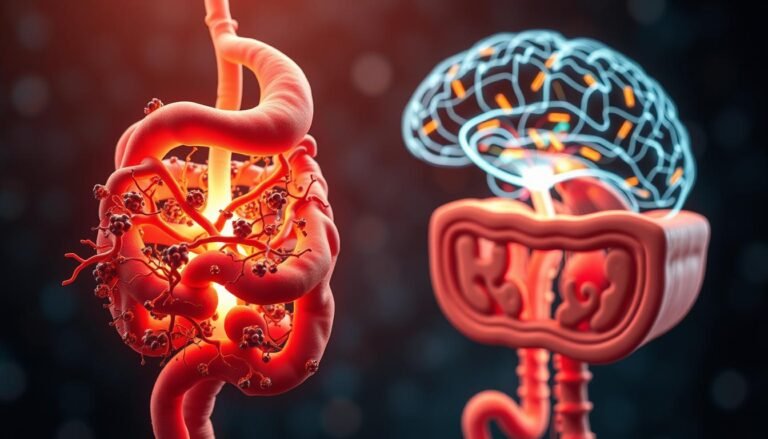
Quick Answer: Your gut and sleep seem to be linked, but the cause is unclear. A study of 6,941 Dutch adults tied poorer sleep to lower gut bacteria diversity, and found that changes in gut species were largely a consequence of sleep behavior. Probiotics for sleep are not proven. NIDDK advises eating at least 3 hours before bed if reflux strikes at night.
Check how caffeine timing affects your night with our caffeine impact on sleep calculator.
What Is The Gut-Brain Connection?
It is the two-way communication between your digestive system and your brain. NIDDK uses the idea to explain irritable bowel syndrome (IBS). It says functional digestive disorders such as IBS are problems with brain-gut interaction, meaning how your brain and gut work together, and that experts think such problems may cause IBS symptoms. The page also says doctors are not sure what causes IBS (NIDDK on IBS).
In sleep research, the idea is extended to the gut microbiome, the community of bacteria in your intestines. The term used is the microbiota-gut-brain axis, and scientists are studying whether it affects sleep and stress.
Does Your Gut Bacteria Affect How You Sleep?
The largest human study we found suggests a link, but not a clear direction. Researchers analyzed 6,941 adults in the Lifelines Dutch Microbiome Project. Lower gut bacteria diversity was associated with poorer sleep quality, a later chronotype (a night-owl pattern) and greater social jet lag, which is the gap between weekday and weekend sleep times. Of 137 bacterial species linked to sleep, 35.6 percent were confirmed in an independent group (Lifelines cohort study).
The study is cross-sectional, meaning it looked at one point in time. The authors say that design prevents them from establishing the order of events, and that the mediation results should be viewed as exploratory and interpreted with caution.
Does Sleep Change Your Gut, Or The Other Way Around?
Probably both, but this study leans one way. Its mediation analyses indicate that changes in the abundance of gut species are largely a consequence of sleep behavior. It also found that certain species may mediate diet’s effect on sleep. For example, two Clostridia species appeared to mediate the effect of coffee intake on social jet lag.
| Question | What the Cohort Study Found |
|---|---|
| Do sleep and gut bacteria go together? | Yes: diversity linked to sleep quality, chronotype and social jet lag |
| Which comes first? | Changes in species were largely a consequence of sleep behavior |
| Does diet matter? | Some species may mediate diet’s effect on sleep |
| Is it proven? | No; cross-sectional and exploratory |
If your sleep schedule shifts a lot between work and free days, read about social jet lag.
Why Did Earlier Studies Disagree?
The Dutch authors say earlier findings were inconsistent largely because of small samples, possible confounders and low-resolution DNA sequencing. Their study used a much larger sample, measured four aspects of sleep (sleep quality, daytime sleepiness, social jet lag and chronotype), and used a more detailed sequencing method that identifies bacteria at the species level. They also replicated known links, such as social jet lag with age, sleep quality with a Mediterranean diet, and chronotype with alcohol intake.
A bigger and more careful study is a better guide than earlier small ones, but it still shows association, not cause. Wait for trials before changing your routine because of a single paper.
Can Probiotics Or Prebiotics Help You Sleep?
Possibly, but it is not established. A 2026 systematic review looked at 56 studies, 33 in humans and 23 in animals. In human trials, interventions improved subjective sleep scores. The review has important limits: it says the evidence relies heavily on subjective questionnaires, there is a substantial gap between rodent models and human outcomes, and follow-up is short, which limits what we know about long-term effects (gut microbiota and insomnia review).
The review also notes it was not registered in advance, and that it excluded observational studies and people with severe medical or psychiatric conditions. So it does not tell us how probiotics work for everyone.
What Does NIH Say About Probiotics?
The NIH’s National Center for Complementary and Integrative Health is cautious. It says much remains to be learned about whether probiotics are helpful and safe for various health conditions, and that in most cases we still do not know which probiotics help and which do not. The page does not discuss sleep (NCCIH).
- The risk of harm from probiotics is greater in people with severe illness or weakened immune systems.
- If you are considering a probiotic supplement, talk to your health care provider first.
- Do not use probiotics as a reason to put off seeing your provider about a health problem.
Does Eating Late Hurt Your Sleep?
For people with reflux, it can. NIDDK says that if you have gastroesophageal reflux disease (GERD) symptoms at night or when you are lying down, eating meals at least 3 hours before you lie down or go to bed may improve symptoms (NIDDK on GERD). Heartburn is a common reason people wake at night.
Read how late to eat before bed for timing tips.
Which Foods And Drinks Can Trigger Reflux?
NIDDK says foods and drinks commonly linked to GERD symptoms include:
- Acidic foods, such as citrus fruits and tomatoes
- Alcoholic drinks
- Chocolate
- Coffee and other caffeine sources
- High-fat foods
- Mint
- Spicy foods
It adds that some people with GERD find certain items trigger symptoms, so talk with your doctor about your own diet. For foods that may help instead, see foods that help you sleep.
Is There A Link Between IBS And Sleep?
We did not find a verified NIH statement on sleep and IBS. NIDDK describes IBS as a chronic disorder that lasts a long time, often years, and notes symptoms may come and go. The page is older, last reviewed in 2017, and does not discuss sleep. If IBS symptoms wake you at night, tell your provider and ask whether sleep and digestion should be treated together.
What Can You Do Now?
These steps are practical, low-risk habits rather than proven gut treatments:
- Keep a steady schedule. The cohort study links social jet lag with gut differences.
- Finish dinner early if you get night reflux.
- Review trigger drinks like coffee and alcohol if heartburn disrupts you.
- Do not rely on supplements for sleep. Ask your provider first.
- Follow the basics in sleep hygiene 101.
What We Do Not Know Yet
A lot, and that is normal for a young field. We do not know whether changing gut bacteria improves sleep for most people, which strains might help, or how long any effect lasts. We also do not know whether better sleep leads to a healthier gut, or the reverse. The honest takeaway is that the gut-sleep link is real as an association, but the treatments built on it are still experimental. Until larger, longer trials arrive, the safest moves are the ones that already have support: a regular schedule, sensible meal timing and care from a provider when symptoms persist.
When To See A Doctor
See a doctor if you have frequent heartburn, especially at night, pain or bowel changes that wake you, or sleep trouble that lasts. NIDDK says that if you think you may have GERD, you should see your doctor. NCCIH says not to use probiotics as a reason to postpone seeing your provider.
If digestive trouble and poor sleep come with low mood and you feel unsafe, call or text 988 in the US.
FAQs About The Gut-Brain Connection And Sleep
Do Probiotics Help You Sleep?
Not proven. A review found improved subjective sleep scores in human trials but noted heavy reliance on questionnaires and short follow-up. NCCIH says much remains to be learned.
Does Gut Health Affect Sleep?
They are linked in a large cohort, but the study cannot show cause. Changes in gut species were largely a consequence of sleep behavior.
How Long Before Bed Should I Stop Eating?
For night reflux, NIDDK says eating at least 3 hours before bed may improve symptoms.
Can Coffee Affect Sleep And The Gut?
The cohort study found two gut species that appeared to mediate the effect of coffee intake on social jet lag. NIDDK also lists coffee as a common GERD trigger.
What Is Social Jet Lag?
It is the gap between your weekday and weekend sleep times. The cohort study linked lower gut bacteria diversity with greater social jet lag.
Do Prebiotics Or Special Diets Change Sleep?
The 2026 review reports some human trials with improved subjective sleep, including diet-pattern studies, but notes the evidence relies on questionnaires and short follow-up.
What Causes IBS?
Doctors are not sure. NIDDK says problems with brain-gut interaction may play a role.
Your Next Step
See how steady your bed and wake times are, one habit linked to better sleep and gut health in research.