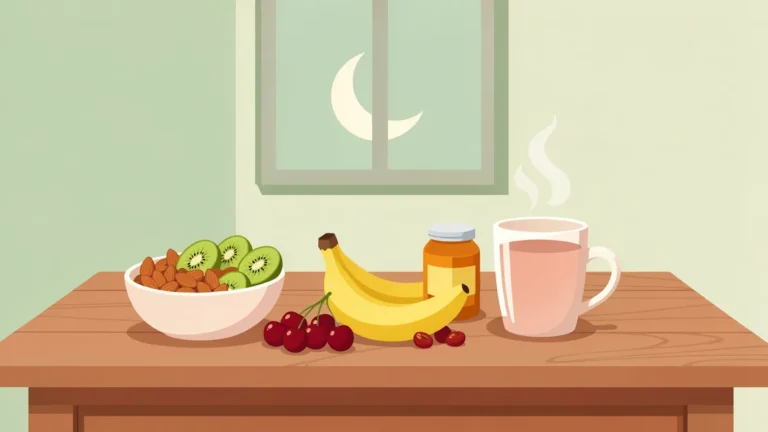
Quick Answer: No single food is proven to make you sleep. Tart cherry, milk and magnesium have some promising but small and mixed studies, and a fatty fish trial in children found no change. The firmer finding is on the other side: caffeine can cut sleep even 6 hours before bed. Cut caffeine early, eat regular meals and use food as a small helper.
Check your own cutoff with our caffeine impact on sleep calculator.
Do Any Foods Really Help You Sleep?
Some foods have been tested, but the studies are usually small, short and uneven in quality. That is why reviews tend to end with “more research needed.” This guide gives the findings and the limits, so you can decide what is worth trying.
Treat the foods below as low-risk experiments, not treatments. If you have ongoing insomnia, food will not replace proper care, which is covered in how to cure insomnia with simple steps.
Does Tart Cherry Help You Sleep?
Maybe a little. A 2025 systematic review found seven interventional studies. Three reported significant improvements in sleep indicators such as sleep duration, sleep efficiency or time to fall asleep, and three reported higher melatonin levels after tart cherry. The studies differed a lot in dose, length and the people tested, and the authors call the evidence limited and heterogeneous (tart cherry review).
In plain terms, tart cherry is a reasonable thing to try, but nobody can promise it will work for you.
The review also reports that three studies found higher melatonin levels after tart cherry and two found lower inflammation markers (CRP and MDA). That fits the idea of how it might work, but higher melatonin in a blood test is not the same as sleeping better, so the sleep results matter more than the mechanism.
Does Warm Milk Work?
The research is mixed. A systematic review of milk and dairy studies from 1972 to 2019 covered 10,833 participants in total. It concluded that a balanced diet including milk and dairy may help sleep quality, but it noted that results were mixed and conclusions limited by small sample sizes and poor study quality (milk and dairy review).
The idea is that milk contains tryptophan, which the body uses to make melatonin. The review calls this a belief about the mechanism, not a proven effect. A glass of milk is harmless for most people and may simply be a calming ritual.
Can Magnesium Help?
The evidence is modest and low in quality, and it is about supplements, not foods. A meta-analysis of three randomized trials in older adults with insomnia found that sleep onset latency was 17.36 minutes shorter with magnesium than with placebo. Total sleep time was about 16 minutes longer, but that difference was not statistically significant (magnesium meta-analysis).
All trials had moderate-to-high risk of bias and the evidence quality was low to very low. The authors said the literature was too weak to give firm advice. Ask a clinician before taking any supplement.
What About Fatty Fish?
We found no good proof for it. In the FINS-KIDS trial, 232 children aged 4 to 6 ate lunches of fatty fish (herring or mackerel) or meat three times a week for 16 weeks. There were no significant differences in sleep between the two groups, and the authors called for more studies. Because the children were young, this trial may not apply to adults. Fish is still a healthy food, just not a proven sleep aid.
| Food | Evidence | Main Caveat |
|---|---|---|
| Tart cherry | Three of seven studies improved sleep | Wide differences between studies |
| Milk and dairy | Mixed results | Small, poor-quality studies |
| Magnesium | 17 minutes faster sleep onset | Supplements, low quality |
| Fatty fish | No change | Preschool children only |
How Were These Studies Done?
The details explain why the results are hard to apply. The milk review pooled 14 studies: eight randomized trials, two crossover experiments, one longitudinal study and three cross-sectional studies. Four studies involved older adults, three toddlers, two children and six adults, including university students. That mix of ages and designs is one reason the results disagree.
The magnesium trials used doses of 320 to 729 mg of elemental magnesium per day, taken two to three times daily as magnesium oxide or citrate tablets. Follow-up ranged from 20 days to 8 weeks. Those are supplement doses, far above what a normal meal supplies, so the results do not show that eating magnesium-rich food would help.
In the fish trial, 222 children finished the study and 170 had usable sleep data: 81 in the fish group and 89 in the meat group. Sleep was reported by parents, which is less precise than a sleep monitor.
Do These Results Apply To You?
Possibly not, and that is a fair question. The magnesium result is from older adults with insomnia. The fish trial is from preschool children. The caffeine study is from healthy adults with good sleep. If you are a teen, pregnant or managing a health condition, the findings may differ, and a clinician can help you choose what is safe.
The safest reading is simple: the studies show enough to make a food a harmless experiment, but not enough to make it a plan.
What Should You Avoid Before Bed?
Here the evidence is firmer. In a double-blind crossover study, 12 healthy normal sleepers took 400 mg of caffeine at bedtime, 3 hours before or 6 hours before bedtime. Each timing disturbed sleep significantly compared with placebo. The authors said caffeine taken 6 hours before bedtime has important disruptive effects, and supported advice to avoid substantial caffeine for at least 6 hours before bed (caffeine timing study).
The 12 participants were healthy adults aged 19 to 48 with a good sleep history, and their usual caffeine intake averaged 115 mg a day. Sleep was tracked at home with a validated portable monitor as well as diaries. The group was small, and 400 mg is a large dose, so smaller amounts may matter less. Your own sensitivity can vary too. Try moving your last coffee earlier and see what changes.
Do Big Late Meals And Alcohol Matter?
For many people they do. Large, late meals can bring heartburn when you lie down, and the research on meal timing is covered in how late to eat before bed.
Alcohol is another common trap. See alcohol and sleep for how it affects the night.
How Can You Use This In Real Life?
These are practical suggestions based on the studies above, not a guaranteed plan:
- Start with caffeine. Move your last cup earlier, at least 6 hours before bed.
- Pick one food to test. Try tart cherry or a glass of milk for two weeks and note any change.
- Keep dinner moderate and finish well before lying down.
- Limit alcohol in the evening.
- Keep the bigger habits steady: a consistent bedtime and a calm wind-down. See sleep hygiene 101.
Food works best as a small helper to these habits. No snack makes up for a late, irregular schedule.
When To See A Doctor
Talk to a doctor if poor sleep lasts for weeks, you snore loudly and feel sleepy by day, or you take medicine and want to add a supplement. Do not use supplements in place of care for a medical condition.
If low mood or thoughts of self-harm come with poor sleep, call or text 988 in the US.
FAQs About Foods That Help You Sleep
What Is The Best Food To Eat Before Bed For Sleep?
No food is proven. Tart cherry and milk have mixed or limited evidence, so choose a light option you enjoy.
Does Tart Cherry Juice Help You Sleep?
A review found three of seven studies reported better sleep indicators, but studies varied widely. It may help some people.
Does Milk Help You Sleep?
Results are mixed. A review called the studies small and of poor quality, so any effect is uncertain.
Does Magnesium Help Sleep?
A meta-analysis in older adults found sleep onset was 17 minutes shorter, but evidence quality was low. Ask a clinician before using supplements.
Does Fish Help You Sleep?
One trial in preschool children found no sleep change from eating fatty fish three times a week.
When Should You Stop Caffeine?
A small trial found 400 mg disturbed sleep even 6 hours before bed. Moving your last cup earlier is a simple test.
Can Eating Too Late Hurt Sleep?
A big late meal can cause heartburn when lying down. The research is mixed otherwise, as explained in our meal timing guide.
Your Next Step
Build an evening routine you can repeat, with meal and drink timing included.
Sources
- The effect of tart cherry on sleep quality and sleep disorders: a systematic review
- The effects of milk and dairy products on sleep: a systematic review
- Oral magnesium supplementation for insomnia in older adults: a systematic review and meta-analysis
- Fatty fish intake and the effect on mental health and sleep in preschool children in FINS-KIDS, a randomized controlled trial
- Caffeine effects on sleep taken 0, 3, or 6 hours before going to bed