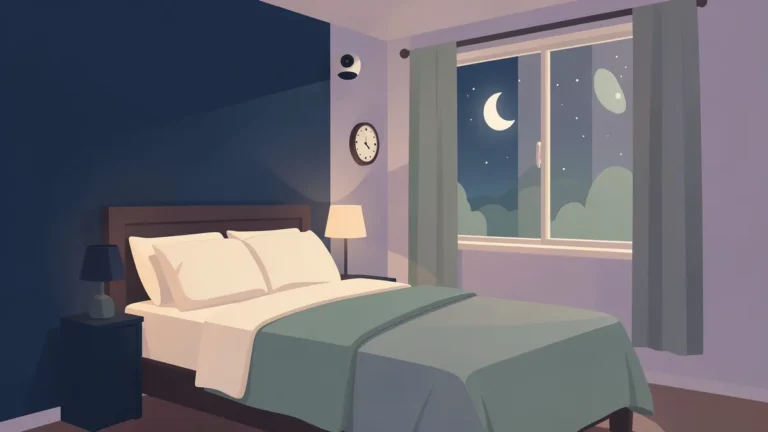
In a sleep study, you spend the night at a sleep center while sensors record your sleep. You arrive in the evening, a technologist attaches the sensors, and you sleep in a private bedroom while they watch the data. The next morning the sensors come off and you go home. It does not hurt. A specialist reviews the recording and you get your results at a follow-up visit. This guide walks through the night, how to prepare and what to expect afterward. It is for education only and does not replace your doctor.
Already have a number from your report? Try the AHI calculator.
What Is A Sleep Study?
A sleep study, also called polysomnography, records your brain waves, breathing, heart rate, oxygen level and movements during sleep. Doctors order it to find the cause of sleep problems or to check whether treatment is working (Cleveland Clinic). MedlinePlus says it is used mainly for obstructive sleep apnea, and it also helps diagnose narcolepsy, periodic limb movement disorder and REM sleep behavior disorder (MedlinePlus). Common reasons to be referred are loud snoring, waking up gasping, trouble falling or staying asleep, and daytime sleepiness (MedlinePlus). If you are not sure you need one, read sleep apnea screening tests first.
Polysomnography Procedure: The Night Step By Step
- Arrive in the evening. MedlinePlus says to plan to arrive about 2 hours before your usual bedtime (MedlinePlus). Cleveland Clinic notes the schedule depends on your sleep habits, and night-shift workers can book daytime studies (Cleveland Clinic).
- Settle into your room. You stay in a private bedroom with a private bathroom (MedlinePlus).
- Get hooked up. A technologist attaches the sensors with tape or adhesive and tests them. You may be asked to move your eyes, open and close your mouth and move your legs (Cleveland Clinic).
- Go to sleep. Technologists watch by video and audio all night (MedlinePlus).
- Wake and go home. You are woken in the morning, the sensors come off and you may fill in a questionnaire (MedlinePlus). The Sleep Foundation says an overnight study lasts 8 to 9 hours in total (Sleep Foundation).
Who Watches You Sleep?
A trained technologist monitors you from another room for the whole night, and a video camera may record your movement (MedlinePlus). If a sensor slips, they can fix it. The recording also lets the doctor see how long you spent in each stage, from light sleep to deep sleep and REM. You can read about these in stages of sleep and what is REM sleep.
Which Sensors Do You Wear?
Cleveland Clinic lists these sensors (Cleveland Clinic):
- Brain waves (EEG): sensors on the scalp, held with gel.
- Eye movement (EOG): four sensors, two around each eye.
- Muscle activity (EMG): sensors on the face and one leg.
- Heart (ECG): one chest sensor.
- Breathing: airflow sensors at the nose and mouth, plus a belt around the chest or belly.
- Oxygen: a clip on your finger that reads oxygen and pulse.
Video and audio are recorded along with the sensor data. Does it hurt? Cleveland Clinic says no, though removing tape can feel uncomfortable (Cleveland Clinic). The Sleep Foundation calls it painless and says there are no needles (Sleep Foundation). The only risk MedlinePlus lists is mild skin irritation (MedlinePlus).
Can You Sleep During A Sleep Study?
Most people can, though perhaps less well than at home. Cleveland Clinic says many people sleep less well in an unfamiliar place with sensors on, and that this usually does not affect results (Cleveland Clinic). The Sleep Foundation agrees that sleeping less than usual is normal and typically does not change the results (Sleep Foundation). Cleveland Clinic adds that a study counts as valid with at least 2 hours of sleep, and that one night is usually enough (Cleveland Clinic). You can get up at night to use the bathroom. Tell the technologist first, and do not unplug wires yourself (Cleveland Clinic, Sleep Foundation).
How To Prepare For A Sleep Study
- Skip caffeine and alcohol. MedlinePlus says to avoid them in the afternoon and evening before. Cleveland Clinic says at least 8 hours before (MedlinePlus, Cleveland Clinic).
- Do not nap that day. Both sources say so (MedlinePlus, Cleveland Clinic).
- Wash your hair, then leave it plain. No lotions, gels, hair sprays or makeup (MedlinePlus, Sleep Foundation).
- Remove nail polish and fake nails. They can affect the finger clip (MedlinePlus).
- Ask about your medicines. Do not skip a dose unless your doctor says so (Sleep Foundation).
- Tell staff about allergies. Mention any allergy to adhesive or tape (Cleveland Clinic).
What To Bring To A Sleep Study
Cleveland Clinic suggests pajamas, a toothbrush, hygiene items, makeup remover and clothes for the next morning (Cleveland Clinic). The Sleep Foundation adds something to read and your own pillow if you like, and says you can ask for a tour of the lab if you feel nervous (Sleep Foundation). A good routine also helps, so see sleep hygiene 101.
Split Night Sleep Study: What It Means
A split-night study combines two tests in one night. The first half diagnoses sleep apnea. If apnea is found, the second half is used to set up CPAP treatment. The Sleep Foundation says it is used when sleep apnea is strongly suspected (Sleep Foundation). If you are told yours may be a split night, ask the sleep center how they decide when to switch. Treatment choices are covered in sleep apnea treatment.
Home Test Or Sleep Center?
MedlinePlus says a home study uses fewer sensors and diagnoses obstructive sleep apnea only. It is not recommended if you have other sleep disorders or breathing-related conditions (MedlinePlus). The AASM says home tests usually lack the brain, eye and muscle sensors needed to tell sleep from wake (AASM position statement). See the home sleep apnea test guide for how that option works.
After The Sleep Study: Getting Results
A technologist collects the data and a doctor reviews it. The Sleep Foundation says this can take as little as a few days or up to two weeks, and a follow-up visit is then scheduled (Sleep Foundation, Sleep Foundation). Cleveland Clinic says a physician such as a pulmonologist or sleep specialist interprets the data, and the timeline varies by facility (Cleveland Clinic). A common number on the report is the AHI. MedlinePlus lists normal as under 5 events an hour, and mild, moderate and severe as 5 to 14, 15 to 29 and 30 or more (MedlinePlus). Try the AHI calculator to see how it is worked out.
Cost And Insurance
The Sleep Foundation says cost is hard to estimate. It depends on the test and the facility, and small clinics usually charge less than large hospitals. Insurance decides your share, and a denied claim can be appealed with proof of medical need (Sleep Foundation). Ask your insurer and the sleep center before you book.
Quick Takeaways
- You sleep in a private room while a technologist watches the recording.
- The sensors are taped on and do not hurt.
- Less sleep than usual is normal and rarely spoils the test.
- Plan for no caffeine, alcohol or nap, and clean, product-free hair.
- Results can take a few days up to two weeks.
When To See A Doctor
See your doctor if you snore loudly, wake gasping, have trouble falling or staying asleep, or feel very sleepy in the day. MedlinePlus lists these as common reasons for a sleep study (MedlinePlus). Your doctor decides whether a sleep study is the right next step.
FAQs About Sleep Studies
Is A Sleep Study Safe?
Yes. Cleveland Clinic says risks are very few. The most likely problem is skin irritation or an allergic reaction to the adhesive (Cleveland Clinic).
What If I Cannot Fall Asleep At All?
Poor sleep in an unfamiliar place is common. A study counts as valid with at least 2 hours of sleep (Cleveland Clinic). Tell the technologist how you slept so your doctor knows.
Do I Get Results The Next Morning?
Usually not. A specialist reviews the data first, which can take a few days to two weeks (Sleep Foundation).
Can Night Workers Have A Daytime Study?
Yes. Cleveland Clinic says night-shift workers can book daytime studies (Cleveland Clinic).
Should I Take My Usual Medicines?
Ask your doctor. Cleveland Clinic says to take medicines as usual unless told otherwise, and MedlinePlus says to ask whether to take a usual sleep medicine (Cleveland Clinic, MedlinePlus).