
Have you ever woken up feeling tired, even after a full night’s rest? You’re not alone. Many people struggle with getting the quality rest they need. The secret lies in your bedroom. Research shows that small changes in your room can make a big difference in how well you sleep.
Your bed is more than just a place to lie down. It’s a space designed to help your brain and body recover. Factors like light, temperature, and even the type of bedding you use can impact your health. By optimizing these elements, you can create a space that promotes a good night sleep.
This guide will walk you through the steps to transform your bedroom into a haven for rest. Backed by trusted sources like the CDC and NIH, you’ll learn how to balance comfort with research-backed tips. Let’s dive in and explore how to improve sleep for a better tomorrow.
Key Takeaways
- Your bedroom setup plays a key role in sleep quality.
- Light, temperature, and bedding are critical factors.
- Research from trusted sources supports these guidelines.
- Small changes can lead to significant improvements.
- Comfort and science work together for better rest.
Understanding Your Sleep Environment
Your bedroom setup plays a bigger role in your rest than you might think. It’s not just about having a comfortable bed or soft pillows. The way your room is designed can directly impact how well you rest. Factors like light, temperature, and even the level of noise can make a significant difference.
The Role of Circadian Rhythms and Body Temperature
Your body follows a natural cycle called the circadian rhythm. This internal clock helps regulate when you feel awake and when you feel tired. As bedtime approaches, your body temperature drops slightly. This change signals that it’s time to rest.
A dark, cool, and quiet room supports this process. Research from the National Institute of Neurological Disorders and Stroke shows that disruptions in light exposure, especially from devices emitting blue light, can interfere with this cycle. Keeping your room between 65 and 70°F can help you fall asleep faster and stay asleep longer.
Why a Relaxing Bedroom Impacts Your Daily Health
Your bedroom isn’t just a place to sleep—it’s a space that affects your overall health. A well-designed room can reduce stress and improve your mood. Studies show that a relaxing environment can lead to better night sleep, which in turn boosts your energy and focus during the day.
Here are some practical tips to create a restful space:
- Use blackout curtains to block outside light.
- Keep the room cool with a fan or air conditioner.
- Reduce noise with white noise machines or earplugs.
| Factor | Ideal Setting | Impact |
|---|---|---|
| Light | Dark or dim | Supports melatonin production |
| Temperature | 65-70°F | Promotes body cooling |
| Noise | Quiet or white noise | Reduces disruptions |
By optimizing these elements, you can transform your bedroom into a haven for rest. Small changes can lead to significant improvements in your sleep quality and overall well-being.
Creating the Ideal Temperature for Optimal Sleep
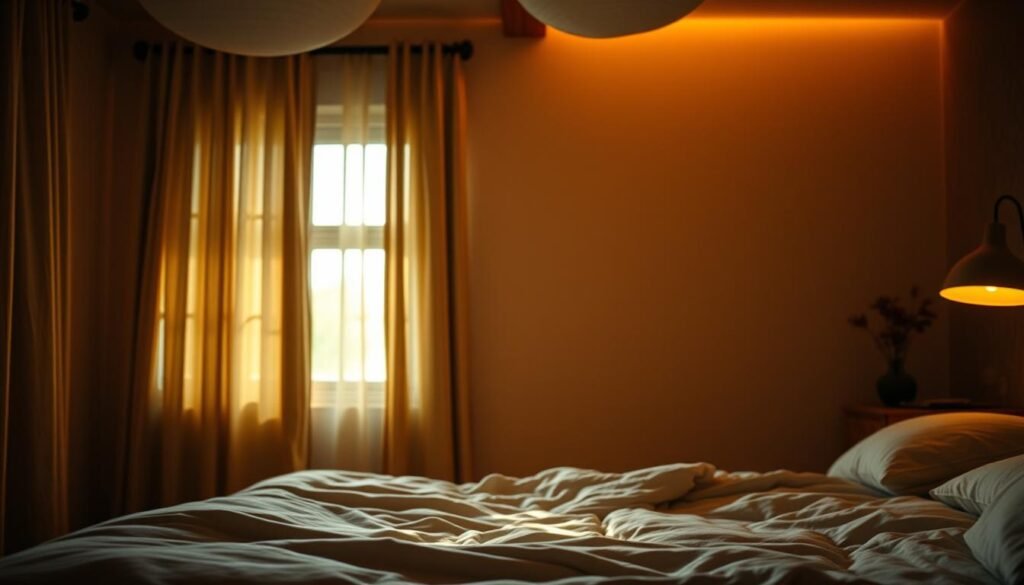
Did you know that the temperature of your bedroom can make or break your rest? Research shows that a cooler room helps your body prepare for sleep. Experts recommend keeping your bedroom between 65 and 68°F for the best results.
Setting Your Thermostat for Restful Nights
Your body naturally cools down as you prepare for rest. This drop in core temperature signals it’s time to relax. Setting your thermostat to around 65°F supports this process. If you’re too warm, consider using a fan for extra air circulation.
According to the CDC and NINDS, this range promotes deeper and more restorative rest. It’s a simple tip that can lead to better sleep and improved energy during the day.
Layering Bedding to Match Your Comfort Needs
Not everyone feels comfortable at the same temperature. Layering your bedding allows you to customize your warmth. Start with a breathable sheet and add blankets as needed. This approach ensures you stay cozy without overheating.
Here’s a quick guide to layering:
- Use a lightweight sheet as your base layer.
- Add a medium-weight blanket for extra warmth.
- Keep a throw blanket nearby for quick adjustments.
By adjusting your bedding, you can create a personalized sleep environment that works for you.
Managing Noise and Light for Restorative Rest

The key to uninterrupted rest might lie in managing noise and light. These two factors often disrupt your ability to fall asleep and stay asleep. By addressing them, you can create a more peaceful space for a good night.
Using White Noise and Soundproofing Techniques
Ambient noise can be a major sleep disruptor. Whether it’s traffic, neighbors, or household sounds, these disturbances can prevent you from relaxing. One effective solution is white noise. Studies show that it can reduce the time it takes to fall asleep by up to 38%.
For those in noisier environments, soundproofing techniques can help. Simple changes like adding thick curtains or sealing gaps around windows can block unwanted sound. If you’re looking for a quick fix, consider using a white noise machine or app set to 50 decibels or lower.
Controlling Artificial Lighting and Blue Light Exposure
Artificial light, especially from screens, can interfere with your sleep cycle. The blue light emitted by phones, tablets, and computers suppresses melatonin production, making it harder to fall asleep. To minimize this effect, avoid using devices at least an hour before bed.
Installing blackout curtains can also make a big difference. They block outside light, creating a darker environment that signals your brain it’s time to rest. For added protection, consider using blue light blockers on your devices or wearing amber-tinted glasses in the evening.
By making these adjustments, you can reduce disruptions and create a consistent, low-noise, low-light ambiance. This approach not only improves sleep onset but also enhances overall sleep quality. For more insights, explore how noise affects sleep and discover additional strategies to optimize your environment.
Science of a Perfect Sleep Environment: Key Components
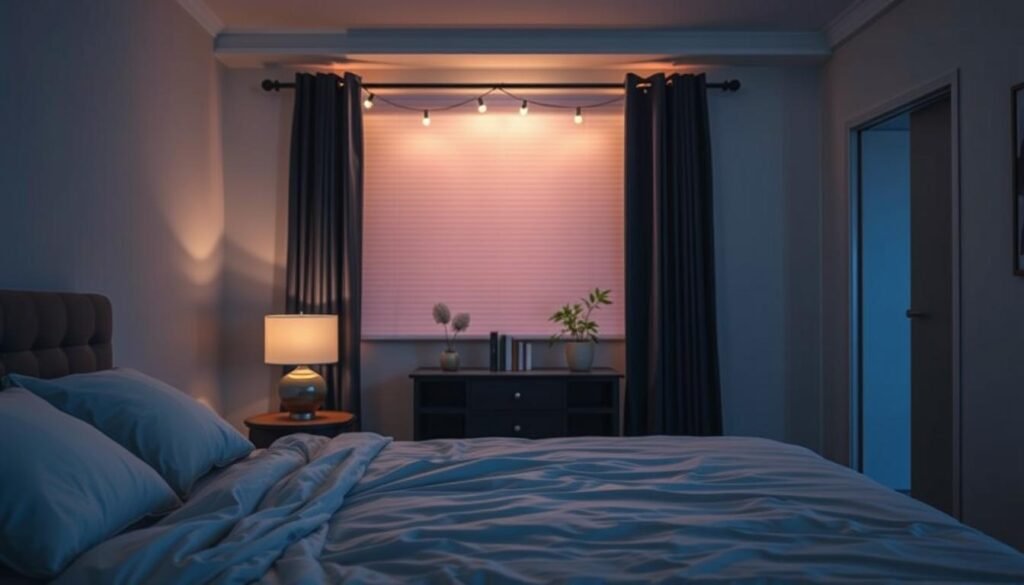
Creating a restful space starts with understanding the key components backed by research. Your bedroom’s design plays a crucial role in promoting quality rest and overall health. By focusing on evidence-based elements, you can transform your room into a sanctuary for relaxation.
Evidence-Based Elements for a Restful Bedroom
Studies show that maintaining a consistent rhythm is essential for better rest. Your body’s internal clock thrives on regularity, and disruptions can lead to poor sleep. A study from the National Sleep Foundation highlights the importance of a cool, dark, and quiet room for optimal rest.
Here are the key factors supported by science:
- Temperature: Keep your room between 65-70°F to support your body’s natural cooling process.
- Light: Use blackout curtains to block outside light and reduce blue light exposure from screens.
- Noise: Incorporate white noise or soundproofing techniques to minimize disruptions.
Proper bedding also plays a significant role. A study published in the Journal of Clinical Sleep Medicine found that breathable materials like cotton can improve sleep quality. By layering your bedding, you can customize your comfort and avoid overheating.
Maintaining a regular rhythm is equally important. Going to bed and waking up at the same time every day helps regulate your internal clock. This consistency not only improves rest but also enhances daily performance and health.
By incorporating these research-backed methods, you can create a bedroom that supports deep, restorative rest. Small changes can lead to significant improvements in your overall well-being.
Choosing Quality Bedding, Mattress, and Pillows

Your choice of bedding and mattress can significantly impact how well you rest. Studies show that the right combination can alleviate back pain and improve sleep quality. By selecting products tailored to your needs, you can create a comfortable and supportive bed environment.
How to Select the Right Mattress for Your Sleep Style
Choosing the right mattress depends on your sleep style and body type. Side sleepers often benefit from softer options, while back and stomach sleepers may need firmer support. For heavier individuals, a mattress with high-density foam or extra coils can prevent sagging.
Testing different models is essential. Many brands offer risk-free home trials, allowing you to try a mattress for up to 120 nights. Look for features like breathability and durability to ensure long-term comfort.
Tailoring Bedding and Pillows to Enhance Sleep Quality
Your bedding should match your comfort preferences and room climate. Breathable fabrics like cotton are ideal for warmer environments, while flannel works well in cooler settings. Layering allows you to adjust warmth as needed.
Pillows play a key role in neck and spinal alignment. The right loft and firmness depend on your sleep position. For example, side sleepers often need thicker pillows, while back sleepers may prefer medium support.
Regularly updating your bedding and pillow ensures optimal comfort. High-quality products not only improve sleep quality but also contribute to long-term health benefits.
Budget-Friendly Bedroom Optimization Tips

Transforming your bedroom into a sleep-friendly space doesn’t have to break the bank. With a few simple tweaks, you can create an environment that promotes better sleep without spending a fortune. Here’s how to make cost-effective changes that enhance your rest quality.
Low-Cost Adjustments for Temperature, Noise, and Light
One of the easiest ways to improve your sleep is by adjusting the temperature. Keeping your room cool, ideally between 65-70°F, can help your body relax. Use a fan or open windows for airflow. Layering your bedding allows you to customize warmth without buying new items.
Reducing noise can also make a big difference. Inexpensive solutions like white noise machines or earplugs can block disruptive sounds. If you’re on a tight budget, try using a phone app that generates calming sounds.
Controlling light is another key factor. Heavy or blackout curtains are an affordable way to block outside light. If curtains aren’t an option, consider using a sleep mask to create a dark environment.
- Use a fan or open windows to regulate temperature.
- Invest in a white noise machine or app for sound control.
- Install blackout curtains or use a sleep mask to block light.
Routine maintenance, like washing your sheets regularly and dusting your room, can also contribute to a healthier environment. These small changes can have a major impact on your sleep quality without requiring significant investments.
For more detailed strategies on optimizing a bedroom for sleep, explore additional tips to create a restful space.
Conclusion
Creating a restful bedroom can transform how you sleep and feel each day. By managing light, temperature, and noise, you can set the stage for a good night. Research-backed tips, like using blackout curtains or adjusting your bedding, make a big difference.
Small changes, such as keeping your room cool or adding a white noise machine, can improve your rest. These adjustments don’t have to be expensive. Simple tweaks can enhance your sleep quality and boost your overall health.
Take time to assess your room and make gradual improvements. A well-optimized space helps you fall asleep faster and stay asleep longer. Start today and enjoy the benefits of better sleep for a healthier, more productive day.
For more tips on improving your sleep hygiene, visit this guide.
FAQ
How does body temperature affect sleep?
Your body temperature naturally drops at night, signaling it’s time to rest. Keeping your bedroom cool, around 60-67°F, helps maintain this rhythm for better sleep.
Why is blue light harmful before bed?
Blue light from screens disrupts melatonin production, making it harder to fall asleep. Limit screen time or use blue light filters an hour before bed.
What’s the best way to reduce noise in the bedroom?
Use white noise machines, fans, or soundproof curtains to block disruptive sounds and create a quieter sleep environment.
How do I choose the right mattress for better sleep?
Pick a mattress that supports your sleep position and body type. Medium-firm options often work well for most people.
Can bedding materials improve sleep quality?
Yes, breathable fabrics like cotton or bamboo help regulate temperature, keeping you comfortable throughout the night.
What are some budget-friendly tips for optimizing my bedroom?
Use blackout curtains, adjust your thermostat, and add a fan or white noise device for affordable improvements to your sleep space.
How does light exposure impact circadian rhythms?
Natural light during the day and dim lighting at night help regulate your internal clock, promoting a consistent sleep-wake cycle.
What’s the ideal pillow for better sleep?
Choose a pillow that aligns your neck and spine based on your sleep position. Side sleepers may need a firmer pillow, while back sleepers benefit from medium support.
Source Links
- Getting a good night’s sleep might stop you from getting another cold — here’s how
- Bedding Myths Debunked: What Really Matters For A Good Night’s Sleep
- Menopause and Sleep: Simple Tips for Better Rest
- Sleep Temperature Optimization – Better Sleep Council | Start every day with a good night’s sleep
- Sleeping Hot? How Your Mattress Could Be the Culprit (and How to Fix It)
- Trouble Sleeping? Sleepmaxxing May Be Your Solution for Quality Rest
- Best Cooling Mattress of 2025
- Here’s why you should use a humidifer when sleeping
- The Best Thermostat Setting to Keep You Warm and Lower Your Energy Bill
- White vs. Brown Noise: This Is the Best Soothing Sound for Your Sleep
- Best Mattress for Side Sleepers
- Sleep Disorder Research News
- Sleep Disorders News
- Most Comfortable Mattress
- Choosing the Perfect Mattress for Two – Better Sleep Council | Start every day with a good night’s sleep
- Best Mattress That Won’t Sag: Expert-Tested For Durability
- Best Affordable Mattresses of 2025
- The Best Bed Cooling Systems: Eight Sleep vs. Chilipad, BedFan
- Sleep
- Exploring the Connection Between Sleep and Mental Health | Wellnite