Updated November 1, 2026
Quick answer: Adjustable fill offers the most control over loft, while molded contour foam provides the most stable neck roll. Research does not establish one universally best material, and a pillow cannot treat every cause of neck pain.
Original site images used in this guide
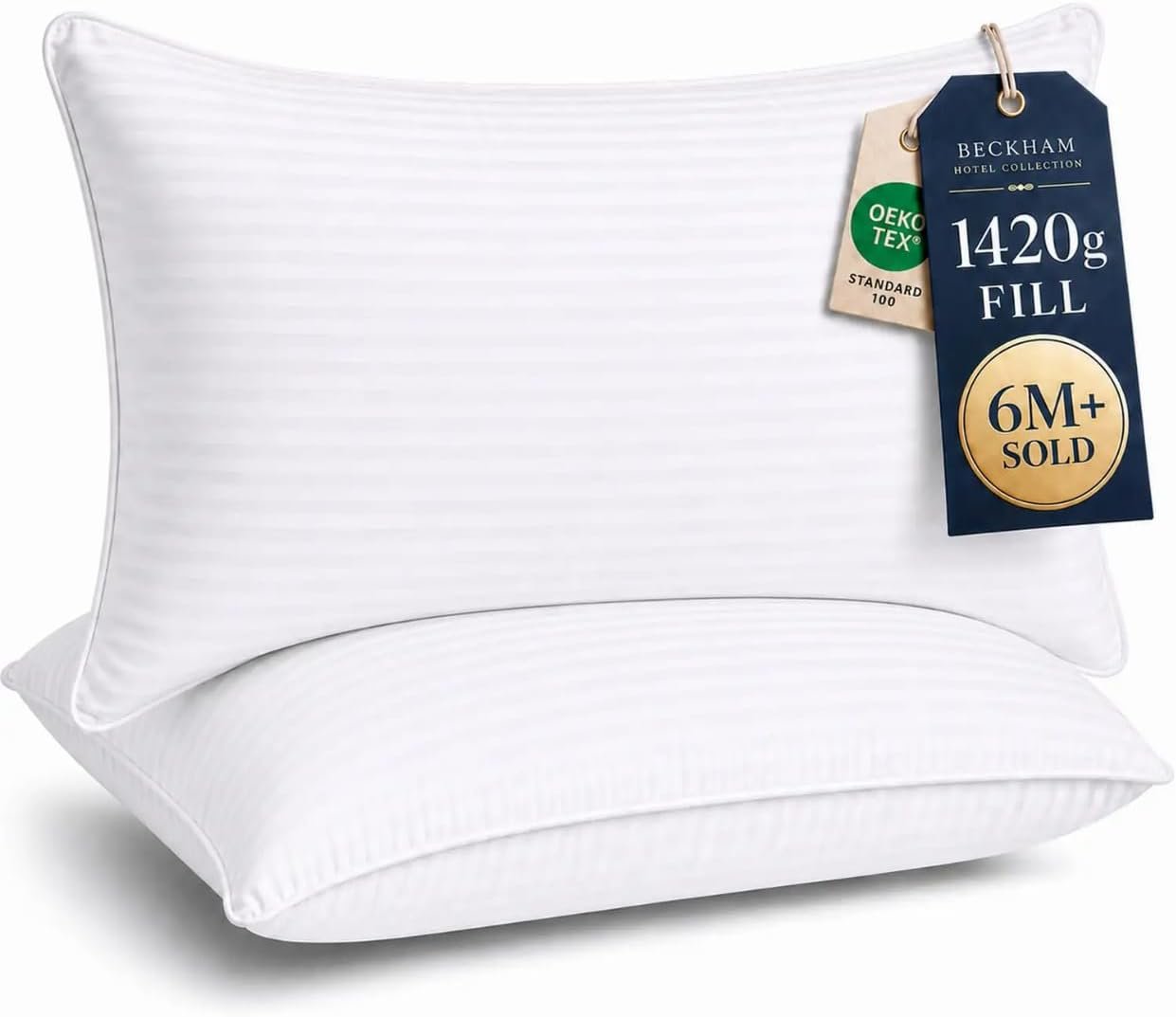
Existing site images are retained for product identification and construction examples. Retailer packaging and included items may change.
What does the evidence say about neck-support pillows?
A 2021 meta-analysis combined nine higher-quality studies with 555 participants and found modest improvements for some pillow designs, but sleep quality did not clearly improve. Shape, height, and individual fit remain more important than marketing labels.
Small posture studies can show how the neck sits for minutes. They cannot prove that one construction prevents pain over years. See the Pang meta-analysis.
Are adjustable foam pillows best for neck support?
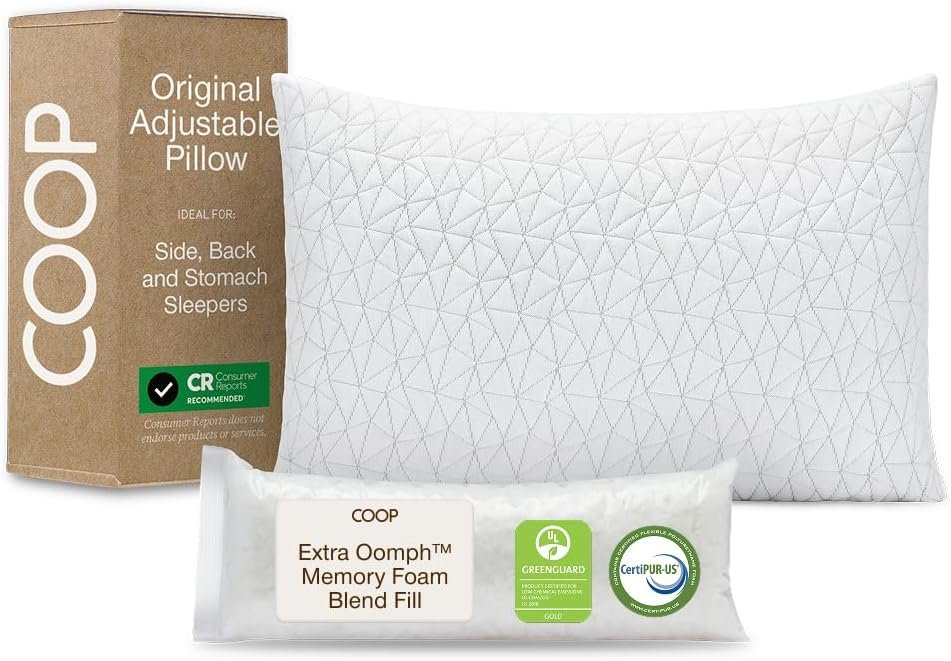
Adjustable foam blends offer the most control because you can change both height and firmness. They are a strong starting point when you do not know your ideal loft or switch between side and back sleeping.
The trade-off is work. Loose fill needs storage, redistribution, and occasional fluffing. A badly adjusted pillow can still be too high, too low, or uneven.
Are contour pillows better for a stable neck position?
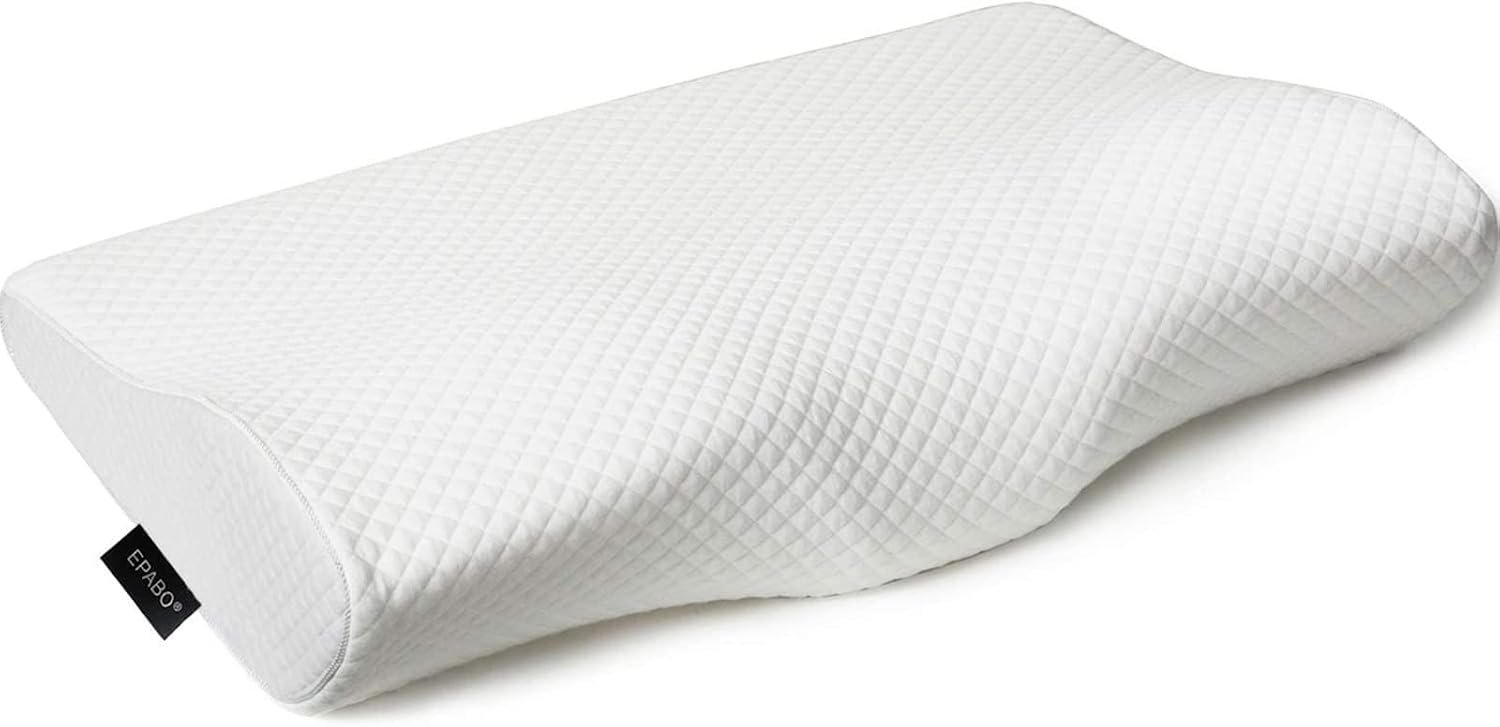
Molded contour foam holds high and low edges more consistently than loose fill. It suits sleepers who already know they like a defined neck roll and do not want fill to shift.
The fixed shape is also its weakness. If neither edge matches your shoulder gap and mattress, the core cannot be fine-tuned. Review the EPABO contour example.
How do pillow constructions compare?
Construction changes whether a pillow prioritizes adjustability, rebound, compression, or shape stability. No category controls all four at once.
| Type | Support behavior | Main fit risk |
|---|---|---|
| Adjustable foam blend | Tunable height and firmness | Uneven setup or maintenance burden |
| Molded contour foam | Stable neck roll | Fixed profile may not match |
| Latex | Fast rebound and stable surface | Less moldable and often heavier |
| Down alternative | Soft compression and easy fluffing | May lose useful loft under load |
| Down or feather | Light and highly moldable | Care, quills, and allergen concerns |
Which construction fits each sleep position?
Side sleepers usually need enough compressed loft to fill the shoulder gap. Back sleepers need moderate support without forward head flexion, while stomach sleepers generally need less height and more compression.
Choose your sleep position
Use fit as the deciding factor. Material preference comes second.
Which pillow type reduces pressure best?
Pressure depends on surface firmness, contact area, ear sensitivity, and how deeply the head sinks. Solid foam spreads load differently from loose fill, while latex rebounds more quickly.
No pressure claim applies to every person. Return the pillow if it causes persistent ear, jaw, face, or shoulder pressure despite a reasonable adjustment period.
When is a pillow not the answer?
A new pillow cannot diagnose or treat nerve compression, injury, inflammatory disease, infection, or vascular causes of pain. Persistent symptoms need assessment rather than repeated product changes.
Frequently asked questions
Is memory foam always best for neck support?
No. Foam can offer stable support, but the wrong height or firmness can worsen discomfort.
Is a firm pillow better?
Firmness does not correct a height mismatch. Judge compressed loft and pressure together.
Do cervical pillows cure neck pain?
No. Some designs may improve comfort, but they do not treat every cause of neck pain.
How long should I test a pillow?
Use one setup for several normal nights unless pain, numbness, tingling, or headaches increase.